“I Thought I Was Going to Die”: Postpartum Haemorrhage (PPH), What Happened and What You Can Do
After a postpartum haemorrhage · Part 1 of 11 (series guide) · 19 min read · Published 1 November 2026 · Reviewed 1 November 2026 · Next review May 2027
By Dr Rosemary Listing, PhD (Law) · Medical negligence lawyer since 2013 · Of Counsel, Peter Evans & Associates
In this guide
A postpartum haemorrhage (PPH) is heavy bleeding after birth. It is common, it is frightening, and most women are never properly told what happened. This guide walks you through the first hour, the first days, bleeding that comes back weeks later, how to get answers, and what the law asks. It is the starting point for an eleven-part series, written for you and for the people who were in the room.
Quick answer · updated November 2026
A postpartum haemorrhage is losing 500 mL of blood or more after giving birth; 1,000 mL or more is severe. It happens after about 1 in 20 births and most women have no warning signs beforehand. Many PPHs are managed well. Some are not: blood loss isn’t measured, help comes late, or no one explains. You are allowed to ask which it was.
Your haemorrhage at a glance
- 1The first hourWhen most PPHs happen. Blood loss should be measured, not guessed.
- 2The first daysTransfusion, iron, close checks and very little sleep.
- 3Weeks 1 to 6Bleeding that comes back: clots, soaked pads, retained tissue.
- 4Getting answersYour records, a debrief, and the question “why?”
- 5Months and yearsTrauma, the next pregnancy and the legal time limit.
At any stage: if you are soaking a pad in an hour, passing large clots, or feel faint, call 000 or go to your nearest emergency department. Don’t wait for a call back.
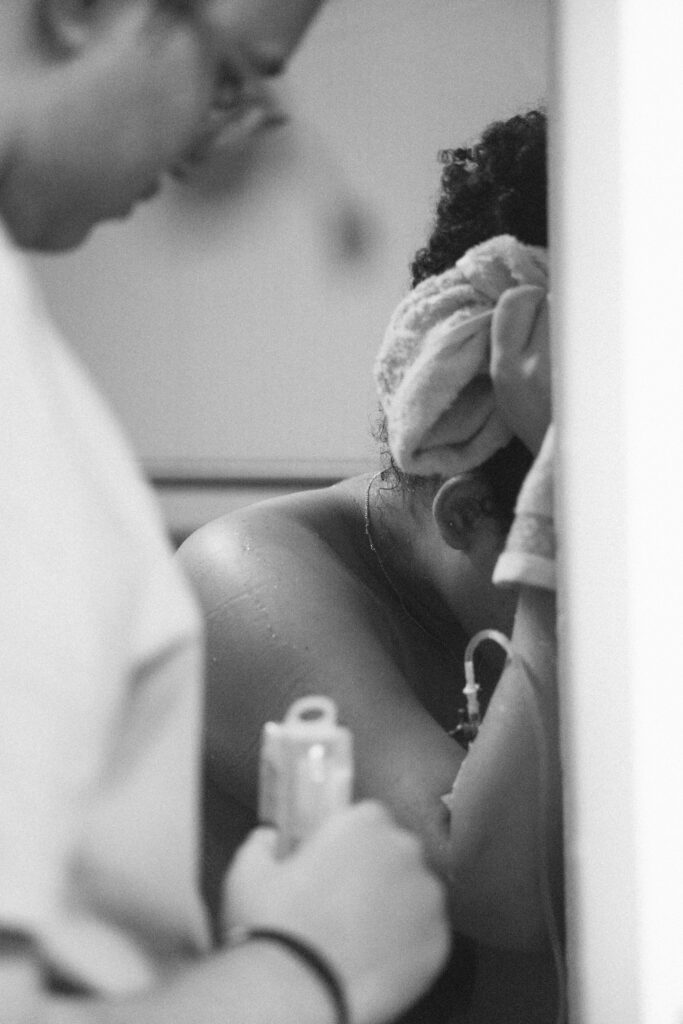
The midwife had her hand on my stomach and she was pressing, hard, and every time she pressed I felt it come out of me. Warm. I remember thinking the bed was warm, like I’d wet it. My son was on my chest and he was perfect and I was looking at his ear.
Then the room filled up. I counted shoes. There were so many shoes. Someone said, “Can someone take the baby?” and my husband took him and went to the corner by the window and just stood there. Nobody looked at me. Everyone looked between my legs.
I said, “Am I dying?” and a doctor I had never seen said, “We’re looking after you,” which is not an answer. I was cold. My teeth were going. They wheeled me out and I watched the ceiling lights go past and I thought, he won’t remember me.
Afterwards, everyone said it was a PPH, like I would know what that was. Three days later I went home with a bag of iron tablets and no idea how close it had been.
A composite story, drawn from the experiences of many families I have worked with, combined and changed so that no one can be identified. It does not describe any individual client.
If any part of that sounds like your birth, this guide is for you. It is also for your partner, who stood in the corner holding your baby, and for your mum, who heard about it in a corridor. You may be days out of hospital and still shaking. You may be two years on and reading this at 3 a.m. because a period frightened you.
I will explain what a postpartum haemorrhage is, what Australian guidelines say should happen, what to look for in your records, and how the law decides whether care fell short. I won’t tell you what to feel about it, and I won’t pretend every PPH is someone’s fault.
Why I can write this
I have been a medical negligence lawyer since 2013 and have worked on many hundreds of claims, a large number of them involving birth. My doctorate in law looked at patterns of failure in medical negligence: how harm comes not from one dramatic mistake but from a chain of small ones. I am not medically qualified. Every clinical statement in this guide is checked against named Australian guidelines, chiefly the NSW Health postpartum haemorrhage guideline (GL2025_013) and the RANZCOG statement on management of PPH (C-Obs 43), and listed at the end so you can check them too.
Start with your question
- “Was what happened to me actually a haemorrhage, or just ‘a bit of bleeding’?” What a PPH is
- “Why did I bleed so much? Nobody told me.” The four causes and Why did I bleed so much?
- “I lost over two litres. Is it normal to still feel this bad?” The first days and recovery after a PPH
- “I passed a clot the size of a golf ball. Is that a haemorrhage?” Bleeding weeks later
- “Can it happen again if we have another baby?” Pregnancy after a PPH
- “Was it someone’s fault?” How the law looks at it
- “Is it too late to do anything?” Time limits for a PPH claim
What a postpartum haemorrhage actually is
Some bleeding after birth is normal. Your placenta was attached to the wall of your uterus by blood vessels carrying around 750 mL of blood a minute at full term. When the placenta comes away, your uterus is meant to clamp down hard and squeeze those vessels shut. That squeeze is the main thing that stops you bleeding.
Definition
Postpartum haemorrhage (PPH): blood loss of 500 mL or more after birth. Severe PPH is 1,000 mL or more, or any amount that causes signs of shock. Massive PPH is bleeding that causes severe shock, usually 2,000 mL or more. Primary PPH happens in the first 24 hours; secondary PPH happens between 24 hours and six weeks after birth.
In plain terms: two cups of blood counts as a haemorrhage. Four cups is serious. If you had a blood transfusion, you almost certainly had a severe one, whatever words were used at the time. (In American posts you’ll see it spelled “postpartum hemorrhage”. It is the same thing.)
The NSW guideline says PPH follows about 5% of births and remains a leading cause of preventable maternal morbidity and mortality. RANZCOG puts Australian rates at five to fifteen per cent. Most cases have no identifiable risk factor beforehand, which is why every birth is meant to be watched as if it could happen.
That is the first both/and you will meet in this guide. A PPH can happen to anyone, at any birth, with excellent care. And the response to it is a skill, set out step by step in guidelines that maternity staff are trained in every year.
The first hour: what should happen
Most haemorrhages happen in the first hour after birth. That hour is also when you are meant to be holding your baby, skin to skin, which is part of the problem: you are focused on your baby, and you may not notice how much you are bleeding until someone else does.
Prevention starts before the bleeding
Australian guidelines recommend offering “active management” of the third stage: an injection of oxytocin (Syntocinon) as your baby is born, and help delivering the placenta. RANZCOG says this cuts the risk of PPH by around half. If you had risk factors, such as a very long labour, an induction, a big baby, twins, or a previous PPH, the plan for your birth should have said so and named the drugs to be used.
Blood loss is meant to be measured, not eyeballed
This matters more than almost anything else in this guide. RANZCOG states plainly that visual estimation of blood loss is unreliable and usually underestimates it. NSW Health requires clinicians to measure and record cumulative blood loss and says the true rate of PPH may be underestimated by up to half because blood loss is so hard to judge by eye. Measuring means weighing pads, drapes and swabs and adding it up.
Women often describe a midwife “almost slipping” in blood, or a doctor only realising when the floor was red. That isn’t just a vivid memory. It can be a sign that loss wasn’t being measured as it went.
Escalation is meant to be fast and loud
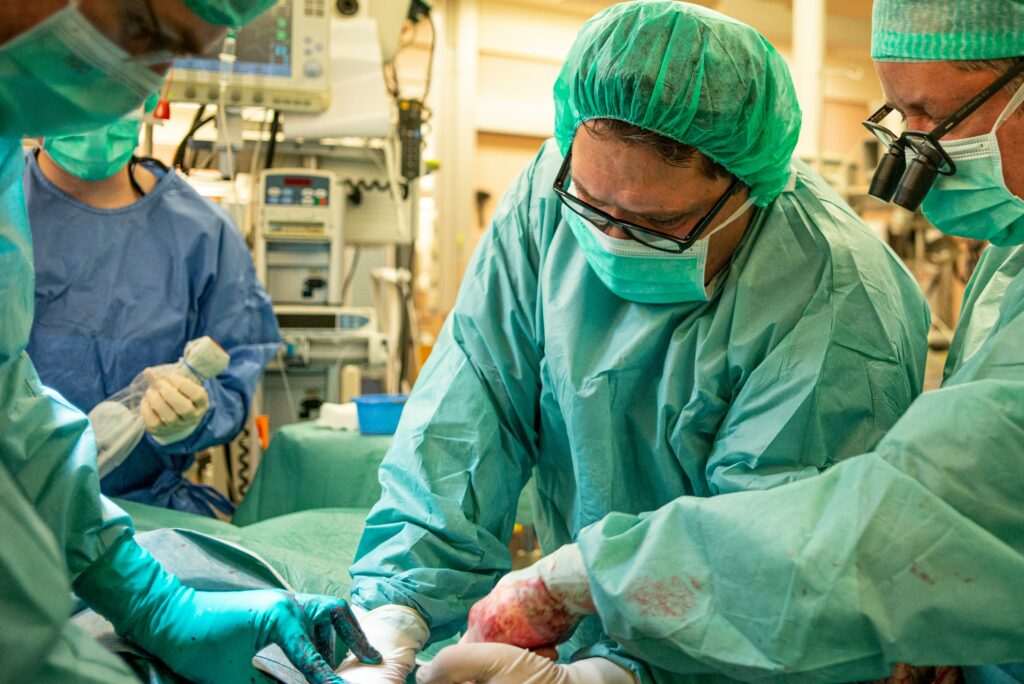
Under the NSW guideline, once loss reaches 300 mL and is continuing, staff should start basic checks. At 500 mL and ongoing, a doctor must be called immediately. At 1,000 mL, or any sign of shock, full resuscitation starts. A massive haemorrhage protocol, with blood products ready in a set ratio, must exist in every NSW maternity unit.
The guideline also says something women rarely hear: during a PPH you must not be left alone, staff must keep talking to you, and wherever possible they should explain interventions such as fundal massage and get your consent. It recognises that your support person is likely to be traumatised by what they see.
Definition
Fundal massage: firm, repeated pressing on the top of the uterus through your abdomen to make it contract. Bimanual compression: one hand inside the vagina and one on the abdomen, squeezing the uterus between them. Balloon tamponade (Bakri balloon, or the JADA suction device): a device placed inside the uterus to press on, or draw closed, the bleeding surface.
In plain terms: the pressing that hurt so much, and the hand or arm inside you, were real treatments, not rough handling for its own sake. They still should have been explained to you, and pain relief considered.
If the bleeding doesn’t stop, the next steps usually include more drugs (ergometrine, carboprost, misoprostol), tranexamic acid (a drug that helps blood clot and, according to a Cochrane review, reduces death from bleeding when given early), theatre, a balloon, compression sutures, and, rarely, a hysterectomy. I go through each of these, and what it felt like for women who were awake, in what happens during a postpartum haemorrhage.
The four causes, and why they matter to you
Doctors sort the causes of PPH into “the four Ts”. Knowing which one applied to you is the key to almost everything that follows: whether it could have been predicted, whether it will happen again, and whether anything was missed.
Tone
The uterus doesn’t contract after birth (uterine atony). More likely after a long or induced labour, a big baby or twins.
In plain terms: the squeeze that stops the bleeding didn’t happen.
Trauma
A tear in the vagina, cervix or uterus, an episiotomy, or bleeding from a caesarean wound.
In plain terms: you bled from an injury, which has to be found and stitched.
Tissue
Placenta, membranes or clots left inside the uterus, or a placenta that grew in too deeply.
In plain terms: something was left behind and the uterus couldn’t close down.
Thrombin
A clotting problem, either one you were born with or one triggered by severe bleeding, infection or pre-eclampsia.
In plain terms: your blood couldn’t clot well enough to stop it.
Percentages from the NSW Health PPH guideline, Appendix 11.1. More than one cause can happen at once.
If no one has ever told you which T it was, that is worth asking. Bleeding from a missed tear is a different story from atony, and a placenta that was “a bit small” on inspection but never checked is different again. I explore this, with the questions to ask, in “Nobody ever told me why”. If you suspect a tear was the source, my article on missed and unexplained tears may help, and if you were induced or augmented, so may my piece on Syntocinon misuse. Placental problems are covered in placenta praevia.
The first days: transfusion, iron and being “fine”
After a severe haemorrhage you may have spent time in theatre, recovery, a high-dependency bed or intensive care. In Victoria, PPH has consistently been the biggest single cause of a new mother being admitted to intensive care. You may have had a catheter, two drips, a balloon left in overnight, and checks every few minutes.
Then, quite quickly, you are a postnatal patient again, expected to feed and change a newborn while your haemoglobin is low enough to make you grey and breathless. Many women describe being told they were “fine” because their observations had settled, while they could barely walk to the shower.
Questions to ask before you go home
- How much blood did I lose, measured, and how much blood or blood products did I receive?
- Which of the four Ts caused it?
- Was the placenta checked and complete?
- What was my haemoglobin when I left, and what is the plan for iron?
- Have I been assessed for blood clot risk? (A severe PPH raises the risk of clots in the legs or lungs, and NSW Health requires an assessment.)
- Who do I call if the bleeding gets heavier at home?
Recovery, anaemia, milk supply and going back to work are covered in “I lost over two litres”. If you can’t remember much of the birth, that is common after shock and blood loss; I wrote about it in I don’t remember my baby’s birth.
Weeks later: when the bleeding comes back
This is the part no one warns you about. A secondary haemorrhage can happen days or weeks after you go home. The most common causes are infection of the uterine lining, retained placental tissue, and the placental site not healing as it should.
Red flags after birth
- Soaking through a pad every hour or two
- Passing large clots, or one sudden very large clot
- Bleeding that had settled and turns bright red again
- A fever over 38°C, chills, or bad-smelling discharge
- Pain in your lower abdomen that is getting worse, not better
- Feeling dizzy, faint, racing heart or short of breath
What to do: heavy bleeding or feeling faint, call 000. Otherwise, go to your hospital’s maternity assessment unit or emergency department today, and say: “I gave birth on [date] and I think I am having a secondary postpartum haemorrhage.”
Signs drawn from Pregnancy, Birth and Baby and the NSW Health PPH guideline.
Women in your situation are often told on the phone that a big clot is “just the placental scab”, or that bleeding at three weeks is normal. Sometimes it is. But NSW Health says women presenting with secondary PPH must have a full assessment and “full consideration of the woman’s concerns”, and that a normal-looking ultrasound doesn’t always rule out retained tissue. If you were sent away more than once while bleeding, read “I passed a clot the size of a golf ball”, and my piece on being dismissed by doctors.
Getting answers: records and a debrief
NSW Health says a debrief should happen at the earliest suitable opportunity, ideally with a clinician who was involved in your care, and that you may need repeated or delayed opportunities to ask questions, including after you leave hospital. It also says your support person should be offered a place in that conversation. If that didn’t happen, you can ask now. My guide on how to ask for a birth debrief has the wording.
Where harm has occurred, hospitals should also follow open disclosure: an honest conversation about what happened, an apology or expression of regret, and what is being done. The national rules for this were revised in June 2026 in the Australian Open Disclosure Framework.
Before any debrief, get your records. Not a summary: the full file. My step-by-step guide to getting and reading your birth records explains how. For a haemorrhage, these are the pages that matter most.
What to look for in the records
| Record | Why it matters |
|---|---|
| Birth plan and antenatal risk notes | Were your risk factors (anaemia, previous PPH, big baby, placenta position) recorded, with a plan for the third stage? |
| Labour notes and partogram | How long labour was, whether Syntocinon was used and at what rate, and when the placenta was delivered. |
| Third stage record | When oxytocin was given, and whether the placenta and membranes were checked as complete. |
| Blood loss record | Whether loss was measured (weighed) and added up, or a single estimate written later. Look for “EBL” (estimated blood loss) and “QBL” (quantified blood loss). |
| Standard Maternity Observation Chart | Pulse, blood pressure and other observations, with times. Shaded zones on the chart are meant to trigger a call for help. |
| Medication chart | Which drugs were given for bleeding (oxytocin, ergometrine, carboprost, misoprostol, tranexamic acid) and at what times. The gaps tell a story. |
| Rapid response and massive haemorrhage protocol records | When the emergency call went out, who came, and when blood was ordered and given. |
| Operation and anaesthetic reports | What was found in theatre, what was done, and the true total blood loss. |
| Transfusion records and blood results | Haemoglobin before and after, units given, and any clotting results. |
| Postnatal notes and discharge summary | What you were told, follow-up arranged, iron, clot prevention, and whether a debrief was recorded. |
If the discharge summary says “PPH 800 mL” and the theatre record says 2,400 mL, write that down. Discrepancies are common and they matter.
It was eight months before I opened the envelope. I did it at the kitchen table after the kids were asleep, with a highlighter, like I was studying.
Page forty-something. A little box in someone’s handwriting: “EBL 2,400 mL.” Two point four litres. I went and got a jug from the cupboard, the big one, and filled it to the line twice and a bit, and I stood there looking at it on the bench.
Then I found the obs chart. My heart rate in the red zone for nearly an hour before the doctor’s name appears. I didn’t know what that meant yet. I just knew it was the first time anything on paper matched what it felt like.
My husband came out and saw the jug and didn’t say anything. He just said, “Yeah. That’s about what it looked like.” We had never talked about it. We talked until two.
A composite story, drawn from the experiences of many families I have worked with, combined and changed so that no one can be identified. It does not describe any individual client.
How the law looks at it
A haemorrhage, even a terrible one, is not on its own negligence. The law asks narrower questions, and they are worth understanding because they are not the same questions you are asking at 3 a.m.
Was the care below a reasonable standard?
In New South Wales, section 5O of the Civil Liability Act 2002 (NSW) says a health professional is not negligent if they acted in a way that was widely accepted in Australia by peer professional opinion as competent practice, unless a court finds that opinion irrational. Guidelines like the NSW Health PPH guideline and RANZCOG’s statement are strong evidence of what competent practice looks like. They are not the law itself, and departing from one is not automatically negligent. But when the guideline says “measure cumulative blood loss” and nobody did, that is the kind of thing an independent expert will look at closely.
Did that make a difference?
This is causation, and it is often the hardest part. You have to show, more likely than not, that proper care would have avoided some or all of the harm: a smaller bleed, no transfusion, no hysterectomy, no intensive care. The High Court in Tabet v Gett [2010] HCA 12 confirmed that in Australia losing only a chance of a better outcome isn’t enough on its own. With PPH, delay matters: the guidelines exist because faster recognition and treatment reduce how much blood is lost.
Were you told what you needed to know?
Under Rogers v Whitaker [1992] HCA 58, doctors must warn you of material risks: risks a reasonable person in your position would want to know about, or that your doctor knew mattered to you. If you had a previous PPH, or were being induced, the risk of bleeding and the plan to manage it were probably things you would have wanted to discuss. My article on induction and consent covers this in more depth.
Who can claim?
Usually the mother. In some cases a partner or close family member who witnessed the haemorrhage and developed a recognised psychiatric injury may have a claim of their own, but the rules for this are strict. If a mother dies, her family may have a claim for the loss of her financial support and care. Each of these needs individual advice.
Is there a time limit?
Yes. In NSW, a claim generally has to be started within three years of when you knew, or ought to have known, that you were injured, that it was connected to someone’s care, and that it was serious enough to justify a claim, and in any case within twelve years of the birth (see the Judicial Commission’s summary). If your baby was also injured, don’t assume their claim can wait until they turn 18; often it can’t. The rules are technical and the dates matter, so ask early. Read medical negligence time limits in NSW and, for PPH specifically, “Is it too late?”.
In my practice
When I review a haemorrhage file, I very rarely find one dramatic error. What I find is a chain. A low haemoglobin at 28 weeks that was noted but not treated. A long induction with no plan for the third stage. Blood loss written as a single round number an hour after the birth. Observations drifting into the shaded zone with no call made. A registrar who arrived, a consultant who didn’t, for too long. Then, weeks later, a phone call where a woman passing large clots was told it sounded normal. Each link on its own might be defensible. Together they can be the difference between a frightening bleed and a transfusion, an intensive care bed, or a hysterectomy. My doctoral research was about exactly these chains, and they are why I read every page, in order, with the times side by side.
Holding two truths
The midwives and doctors who were in that room may well have saved your life. And the care before or after that moment may still have fallen short. Both can be true. You can be grateful to the person who stopped the bleeding and still want to know why it got that far, why no one explained, or why you were sent home twice. Asking isn’t ingratitude, and it isn’t an attack on people who work very hard. It is how systems learn.
The bigger picture
PPH is not rare, and it is not a solved problem. Safer Care Victoria reported that PPH caused 37% of all severe acute maternal morbidity in Victoria in 2019 and that it is often avoidable, then ran a statewide PPH collaborative to bring rates down, including moving hospitals to measured blood loss. Queensland’s statewide guidance sets out a stepwise response flowchart and notes the strong link between antenatal anaemia and PPH. NSW updated its guideline in 2025, adding stronger requirements on consent, trauma-informed care and debriefing.
The NSW Parliament’s Birth Trauma inquiry, which received more than 4,000 submissions, heard repeatedly from women who were not told what was happening during emergencies, including from the Australasian Birth Trauma Association. Obstetric haemorrhage remains one of the leading direct causes of maternal death in Australia, though deaths are rare.
If you want to raise concerns outside the hospital, the Health Care Complaints Commission handles complaints about NSW health services. Whether to complain, claim, or both is a real decision; my guide on making a complaint after a traumatic birth includes a template, and “I kept telling them something was wrong” looks at when PPH care falls short.
Months and years later
Each article in this series takes one moment and stays with it. If you are thinking about another baby, “Can it happen again?” walks through the planning conversation. If the three-year clock is on your mind, start with “Is it too late?”. If your partner can’t stop replaying it, start with “He was left holding our baby in the corner”. If you wake up back in that room, read PTSD after a PPH. If you lost your uterus, “They had to take my uterus” is for you. To see where else birth injuries happen, explore the birth injury map.
Support
- PANDA National Helpline: 1300 726 306. Counselling for parents, including partners, during pregnancy and the first year.
- Gidget Foundation Australia: 1300 851 758. Free psychological sessions for expectant and new parents, including after birth trauma.
- Pregnancy, Birth and Baby: 1800 882 436. Maternal child health nurses, 7am to midnight, seven days.
- Birth Trauma Australia (formerly the Australasian Birth Trauma Association): peer support for mothers and partners, online.
- Health Care Complaints Commission (NSW): 1800 043 159. Help making a complaint about a health service.
- Lifeline: 13 11 14, 24 hours. In an emergency, call 000.
More options, including low-cost counselling, are in finding support after birth trauma in Australia. And if people keep telling you that at least your baby is healthy, this one is for you.
The woman with the jug went back to her obstetrician with a list. It was the first appointment where she didn’t cry, because for the first time she knew what to ask.
With care, Rosemary
Frequently asked questions
How much blood loss is a postpartum haemorrhage?
500 mL or more after birth is a PPH. 1,000 mL or more, or any loss causing shock, is a severe PPH. If you needed a blood transfusion, your bleed was almost certainly severe.
Is PPH anyone’s fault?
Often not. Most women who have a PPH had no risk factors and it was managed well. It may involve negligence when risks weren’t planned for, blood loss wasn’t measured, help was delayed, or later bleeding was dismissed.
Can you have a PPH weeks after giving birth?
Yes. A secondary PPH can happen from 24 hours to six weeks after birth, and some sources say up to 12 weeks. Heavy bleeding, large clots, fever or feeling faint need same-day care.
Will I have a PPH again in my next pregnancy?
Not necessarily. Your risk is higher; one Australian hospital estimates up to 15%. Knowing the cause helps, and there are steps your team can take to lower the risk.
Why does no one explain what happened?
Staff are focused on stopping the bleeding, and follow-up is often patchy. NSW Health says you should be offered a debrief, including later on. You can ask for one at any time.
How long do I have to make a claim for a PPH in NSW?
Generally three years from when you knew enough to realise you had a claim, with a 12-year outer limit. The rules are technical, so get advice early rather than late.
Questions about your haemorrhage?
When you’re ready, and not before, I can look at what happened with you. A free case review means I listen to your story, help you work out what your records show, and tell you honestly what I think, with no obligation.
The series: After a postpartum haemorrhage
- “I Thought I Was Going to Die”: Postpartum Haemorrhage (PPH), What Happened and What You Can Do (you are here)
- “Is It Too Late?” PPH: Time Limits and What a Claim Can Cover
- “Nobody Ever Told Me Why”: Why Did I Bleed So Much?
- “Their Arm Was Inside Me and No One Explained”: What Happens During a PPH
- “I Lost Over Two Litres”: Recovery, Anaemia and Milk Supply After a PPH
- “I Passed a Clot the Size of a Golf Ball”: Secondary PPH and Retained Placenta
- “I Kept Telling Them Something Was Wrong”: When PPH Care Falls Short
- “He Was Left Holding Our Baby in the Corner”: When Your Family Saw the Haemorrhage
- “I Still Wake Up Back in That Room”: PTSD After a PPH
- “Can It Happen Again?” Pregnancy and Birth After a PPH
- “They Had to Take My Uterus”: Emergency Hysterectomy After Birth
This series is part of my work on birth trauma and obstetric negligence. You might also find the caesarean injuries no one warns you about useful if your haemorrhage followed a caesarean.
References
- NSW Health. Postpartum Haemorrhage, Guideline GL2025_013. August 2025.
- RANZCOG. Management of Postpartum Haemorrhage (C-Obs 43). Current November 2021.
- Pregnancy, Birth and Baby. Postpartum haemorrhage.
- Mater. Postpartum haemorrhage: patient information.
- Shakur H et al. Antifibrinolytic drugs for treating primary postpartum haemorrhage. Cochrane Database of Systematic Reviews 2018.
- Queensland Clinical Guidelines. Initial response to postpartum haemorrhage (flowchart F24.1-1-V6-R29).
- Queensland Clinical Guidelines. Primary postpartum haemorrhage: clinical guideline education presentation. 2024.
- Safer Care Victoria. Postpartum haemorrhage collaborative.
- Safer Care Victoria. Postpartum Haemorrhage Collaborative: evaluation report. 2024.
- Safer Care Victoria. New hospital reporting driving targeted improvement for Victorian women and families.
- Australian Institute of Health and Welfare. Australia’s mothers and babies: maternal deaths.
- Australian Commission on Safety and Quality in Health Care. Australian Open Disclosure Framework. June 2026.
- NSW Legislative Council Select Committee on Birth Trauma. Birth trauma, Report 1. May 2024.
- Australasian Birth Trauma Association. Submission 254 to the NSW Inquiry into Birth Trauma. 2023.
- Civil Liability Act 2002 (NSW), s 5O.
- Rogers v Whitaker [1992] HCA 58; (1992) 175 CLR 479.
- Tabet v Gett [2010] HCA 12.
- Judicial Commission of NSW. Civil Trials Bench Book: Limitations.
- Health Care Complaints Commission. What can I make a complaint about?
A composite story, drawn from the experiences of many families I have worked with, combined and changed so that no one can be identified. It does not describe any individual client.
About the author. Dr Rosemary Listing holds a PhD in Law from the Australian National University; her doctorate examined patterns of failure in medical negligence. She has practised in medical negligence since 2013, is Of Counsel at Peter Evans & Associates in Newcastle, NSW, and teaches health law at the University of Newcastle. She is not medically qualified.
Last updated: 1 November 2026 · First published: 1 November 2026 · Next review: May 2027
Cite this article: Listing, R. “I Thought I Was Going to Die”: Postpartum Haemorrhage (PPH), What Happened and What You Can Do. Reframe Legal, 1 November 2026. https://reframelegal.com/postpartum-haemorrhage-pph/
This article is general information, not legal or medical advice. Every situation is different. If you are worried about bleeding or your health, contact your doctor, midwife or hospital. In an emergency call 000. For crisis support call Lifeline on 13 11 14.
Legal services are provided by Peter Evans & Associates.