
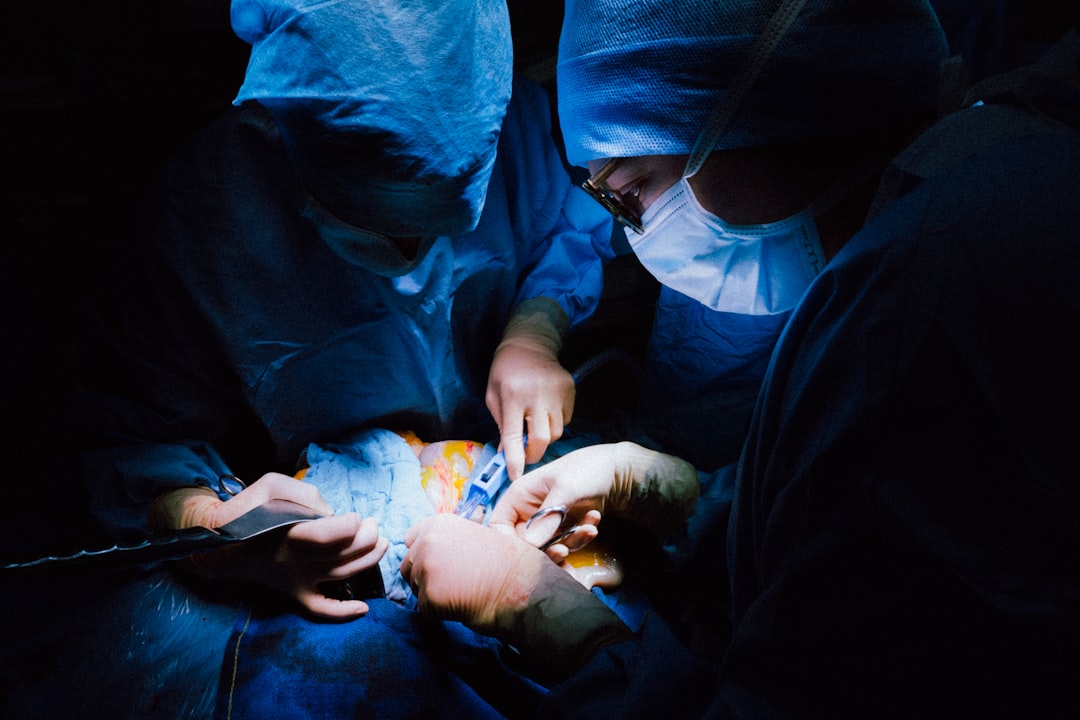
Why does spinal implant hardware cause metallosis — and how long can it go undetected?
For many people living with spinal implants, that sentence describes years of their life. Symptoms like pain, fatigue, and neurological changes get attributed to the original condition, to recovery, or to anxiety. Meanwhile, the device itself may be shedding metal particles into surrounding tissue — a process called metallosis — and nobody has looked for it yet.
A common pattern — where care can break down with spinal implants
Metallosis is not a rare theoretical risk. Documented cases — including those involving MAGEC growing rods used in children with scoliosis — show that metal debris can accumulate in tissue for years before anyone identifies it as the source of a patient’s symptoms.
Understanding where care breaks down helps explain why so many people go undiagnosed for so long.
Symptoms attributed to the wrong cause
When a patient with spinal hardware reports pain, swelling, or fatigue, clinicians often attribute these symptoms to the original spinal condition, post-surgical recovery, or psychological factors. Few immediately consider that the implant itself may be failing. This attribution error is one of the most consistent patterns in delayed metallosis diagnosis.
Imaging that misses the problem
Standard X-rays show whether hardware is in position. They do not show metal particle accumulation in soft tissue, fluid collections around the implant, or early tissue destruction. Clinicians who rely only on X-rays to assess implant function will miss metallosis almost every time. MRI and ultrasound — and in some cases, metal ion blood testing — are needed to detect soft tissue changes.
No system for monitoring implant performance over time
Many patients receive spinal implants and then attend only routine follow-up appointments. No clinician actively monitors for signs of device degradation between those appointments. The Australian Commission on Safety and Quality in Health Care has identified implant surveillance as an area requiring stronger national frameworks — yet in practice, many patients fall through the gaps.
Failure to act on manufacturer safety alerts
Regulatory bodies and device manufacturers sometimes issue safety communications about specific implant models. Surgeons and hospitals do not always pass these alerts on to patients. Some patients learn — years later — that a warning existed about their specific device while they were still experiencing unexplained symptoms.
Delayed referral to a specialist
General practitioners and even some orthopaedic surgeons may not recognise the signs of metallosis. Referral to a specialist with experience in implant failure is often delayed, sometimes by years. By the time the correct diagnosis arrives, significant tissue damage may already have occurred.
-
1Implant placedPatient receives spinal hardware — rods, screws, or a growing rod system — to correct or stabilise the spine.
-
2Symptoms beginMonths or years later, the patient notices pain, swelling, fatigue, or neurological changes. Clinicians attribute these to the original condition.
-
3Inadequate investigationX-rays show hardware in position. No soft tissue imaging or metal ion testing is ordered. The patient is reassured.
-
4Continued deteriorationMetal particles continue accumulating. Tissue damage progresses. The patient’s symptoms worsen or new symptoms appear.
-
5Diagnosis — often years lateAdvanced imaging or a specialist review finally identifies metallosis. By this point, revision surgery is often necessary and some damage may be permanent.
When things start to go wrong — recognising the warning signs
Metallosis does not announce itself clearly. Symptoms overlap with many other conditions, which is part of why it takes so long to identify. Knowing what to look for — and knowing that these symptoms deserve investigation — matters.
Symptoms that should prompt investigation in a patient with spinal implant hardware:
• Persistent or worsening pain at or near the implant site, especially pain that does not respond to usual management
• Swelling, warmth, or a palpable mass near the spine or surrounding tissue
• Unexplained fatigue, weakness, or a general sense of feeling unwell
• Neurological changes — numbness, tingling, or weakness in the limbs
• Skin changes or discolouration near the implant site
• Elevated metal ion levels in blood tests (cobalt, chromium, or titanium, depending on the implant type)
• Fluid collections visible on imaging near the implant
• Symptoms that began or worsened after a period of apparent stability
Not every person with these symptoms has metallosis. But every person with spinal implant hardware who develops these symptoms deserves a thorough investigation — not reassurance based on a normal X-ray alone.
Understanding metallosis and spinal implant failure: what it is and what normally happens
Metallosis is the accumulation of metal debris in the body’s soft tissues. It happens when an implanted metal device — a joint replacement, a spinal rod, a screw system — sheds tiny particles through friction, corrosion, or mechanical failure. The body cannot remove these particles easily. Instead, they trigger an inflammatory response that damages surrounding tissue over time.
In spinal surgery, implants are used to correct deformity, stabilise the spine after injury or disease, or support growth in children with conditions like scoliosis. Most spinal implants are made from titanium alloys or cobalt-chromium alloys. Both can shed particles under the right — or wrong — conditions.
How MAGEC rods became a focus of concern
MAGEC rods (Magnetically Controlled Growing Rods) are a specific type of implant used in children with early-onset scoliosis. A surgeon implants the rods and then adjusts their length non-surgically using an external magnet — avoiding repeated open surgeries as the child grows. The design was considered a significant advance in paediatric spinal care.
Over time, however, reports emerged that the internal actuator mechanism in some MAGEC rods was corroding and leaking titanium debris into surrounding tissue. Children and their families described years of unexplained symptoms — pain, fatigue, swelling — that clinicians attributed to other causes. When the devices were eventually removed and examined, significant metal debris and tissue damage were found.
The MAGEC rod cases are not isolated. They represent a broader pattern: a device approved for use, implanted in patients, and then found — years later — to be causing harm that nobody was actively looking for. For more general information about implant-related health concerns, Healthdirect Australia provides accessible guidance on medical devices and when to seek review.
What proper monitoring looks like
A patient with spinal implant hardware should receive regular follow-up that goes beyond checking whether the hardware is in position. Proper monitoring includes clinical assessment of symptoms, appropriate imaging when symptoms change, and — for patients with metal-on-metal components — periodic blood testing for elevated metal ion levels. Surgeons should also keep patients informed of any safety communications relating to their specific device.
What metallosis is: The accumulation of metal particles shed by an implanted device, causing inflammation and tissue damage in surrounding areas.
Who is at risk: Anyone with metal spinal implants, particularly those with metal-on-metal components or devices with known corrosion issues such as certain MAGEC rod models.
How it is detected: Through soft tissue MRI, ultrasound, blood metal ion testing, and — in some cases — only at the time of revision surgery when the implant is removed.
Why it is often missed: Standard X-rays do not show soft tissue changes. Symptoms overlap with other conditions. No routine surveillance system exists for most implant types in Australia.
What treatment involves: Revision surgery to remove the failing implant, debridement of damaged tissue, and — where possible — replacement with a different device. Some tissue damage is irreversible.
Why this matters legally
A duty of care — the legal obligation a clinician or hospital owes a patient to provide competent, careful treatment — exists from the moment a patient enters care. That duty does not end when the surgery is complete. It extends to follow-up, monitoring, and responding appropriately when a patient reports symptoms.
Not every case of metallosis means something went legally wrong. Implants can fail even when every clinician acted carefully. Some degree of corrosion risk is known and disclosed. But when a clinician dismisses symptoms that should have prompted investigation, fails to order appropriate imaging, or does not inform a patient of a known device safety issue, the question of whether that duty of care was met becomes a serious one.
For a fuller explanation of how medical negligence law applies in these situations, Reframe Legal — Medical Negligence sets out the framework in plain terms.
A spinal implant that corrodes despite proper surgical technique and appropriate monitoring — some corrosion risk is a known and disclosed feature of metal implants
A clinician who repeatedly dismissed a patient’s symptoms, ordered no soft tissue imaging, and did not disclose a manufacturer safety alert — causing years of undetected tissue damage
This is a general educational framework only. Each case is assessed on its individual facts.
When spinal implant metallosis may amount to medical negligence
Medical negligence — the legal term for care that falls below the standard a reasonable clinician would have provided, causing harm — can arise in metallosis cases in several distinct ways.
Failure to investigate reported symptoms
If a patient with spinal hardware repeatedly reported pain, swelling, or neurological changes, and no clinician ordered soft tissue imaging or metal ion blood testing, that failure may constitute a breach of the duty of care. The question is whether a competent clinician in the same position would have investigated further.
Failure to disclose a known device risk
Informed consent — the legal and ethical requirement that a patient be told of material risks before agreeing to treatment — extends to known risks associated with a specific device. If a surgeon knew, or should have known, that a particular implant model had a documented corrosion problem, and did not tell the patient, that omission may be legally significant.
Failure to act on a safety alert
When a manufacturer or regulator issues a safety communication about an implant, the treating clinician has a responsibility to review it and consider whether it affects their patients. Ignoring a safety alert — or failing to pass relevant information to a patient — can form part of a negligence claim.
The NSW Civil Liability Act 2002 sets the legal framework for assessing these claims in New South Wales. In plain terms, it requires courts to ask what a reasonable clinician in the same specialty would have done — and whether the failure to do that caused measurable harm to the patient.
When harm becomes long-term or permanent
The harm caused by undetected metallosis is not limited to the period of misdiagnosis. Metal particles cause ongoing inflammation. Tissue destruction continues for as long as the failing device remains in place. By the time a correct diagnosis arrives, the damage may already be extensive.
Physically, patients may face revision surgery that is significantly more complex than the original procedure. Surrounding tissue that has been destroyed by metal debris cannot always be fully repaired. Some patients experience permanent nerve damage, chronic pain, or reduced mobility that persists long after the implant is removed.
Psychologically, years of dismissed symptoms take a serious toll. Many patients describe a loss of trust in medical care, anxiety about future procedures, and the lasting impact of being told — repeatedly — that nothing was wrong when something clearly was. Children who experienced this during formative years face additional developmental and emotional consequences.
Financially, the costs accumulate quickly. Revision surgery, rehabilitation, ongoing specialist care, lost income during recovery, and the need for long-term support all represent real economic harm. For families of children with MAGEC rods, the financial burden often falls on parents who reduced working hours to manage their child’s care.
What compensation can cover in spinal implant metallosis cases
In New South Wales, compensation in a medical negligence case can cover a range of losses — not just the immediate medical costs, but the full picture of how the harm affected a person’s life. This includes pain and suffering, lost income (past and future), the cost of medical treatment and revision surgery, rehabilitation expenses, and the cost of care provided by family members.
| Level of harm | Typical compensation range |
|---|---|
| Moderate injury | $50,000–$150,000 |
| Serious injury | $150,000–$500,000 |
| Severe / life-changing injury | $500,000+ |
Each case is assessed on its own facts. These figures are general ranges only. The severity of tissue damage, the length of the diagnostic delay, the age of the patient, and the impact on daily life all affect the final assessment.
Time limits apply to legal claims in NSW. Generally, a person has three years from the date they knew — or ought reasonably to have known — that they had a potential claim. For children, different rules apply. Acting promptly to understand your position preserves your options.
Bringing it together — do the pieces fit?
If you have read this far, you may be trying to work out whether what happened to you or your child fits a pattern that deserves closer examination. These questions are not legal tests. They are prompts to help you think clearly about your experience.
For a detailed explanation of how the legal process works in NSW — from gathering records to expert assessment — Reframe Legal — How Medical Negligence Claims Work in NSW walks through each stage clearly.
You don’t need certainty to understand your position
Most people who experienced years of dismissed symptoms do not feel certain about anything. They feel confused, exhausted, and unsure whether what happened to them was unusual or just bad luck. That uncertainty is completely understandable — and it is not a reason to avoid seeking clarity.
Legal clarity does not come from being certain something went wrong. It comes from examining the facts — the records, the imaging, the timeline of symptoms and responses — and comparing them against what a competent clinician in the same position would have done. That examination is what a specialist lawyer does. The patient does not need to reach a conclusion first.
Consent is also a significant issue in many implant cases. If a patient was not told about a known corrosion risk, or was not informed of a safety alert relating to their device, that failure may be legally relevant regardless of whether the surgery itself was performed competently. Reframe Legal — Informed Consent and Medical Negligence explains how consent law applies in NSW.
Clinicians in Australia are registered with and regulated by AHPRA — Australian Health Practitioner Regulation Agency. AHPRA handles complaints about practitioner conduct separately from legal claims. Some people pursue both pathways; others pursue only one. Understanding the difference helps you make an informed decision about your next step.
About the lawyer behind this article

Dr Rosemary Listing is a medical negligence lawyer with a PhD focused on the intersection of medical practice and legal accountability. Her academic background gives her an unusually detailed understanding of how clinical decisions are made — and where they fall short.
Rosemary has worked on cases involving spinal implant complications, including situations where patients or their families spent years seeking an explanation for symptoms that clinicians attributed to other causes. She understands that the harm in these cases often comes not from the original surgery, but from the years of delay that followed.
In her experience, the people who seek her out are not primarily looking for someone to blame. They want to understand what happened, why it was not caught sooner, and whether the care they received met the standard they were owed. Those are legitimate questions — and they deserve careful, honest answers.
Rosemary’s role is to examine the clinical record, identify where the care departed from accepted practice, and give clients a clear picture of whether their circumstances support a legal claim. She does not encourage claims where the facts do not support one.
Her practice is based in New South Wales and focuses exclusively on medical negligence matters, including cases involving surgical implants, diagnostic delay, and informed consent failures.
This article is general legal information only. It does not constitute legal advice. Each person’s circumstances are different. The law discussed applies to New South Wales, Australia. Time limits apply to legal claims.