
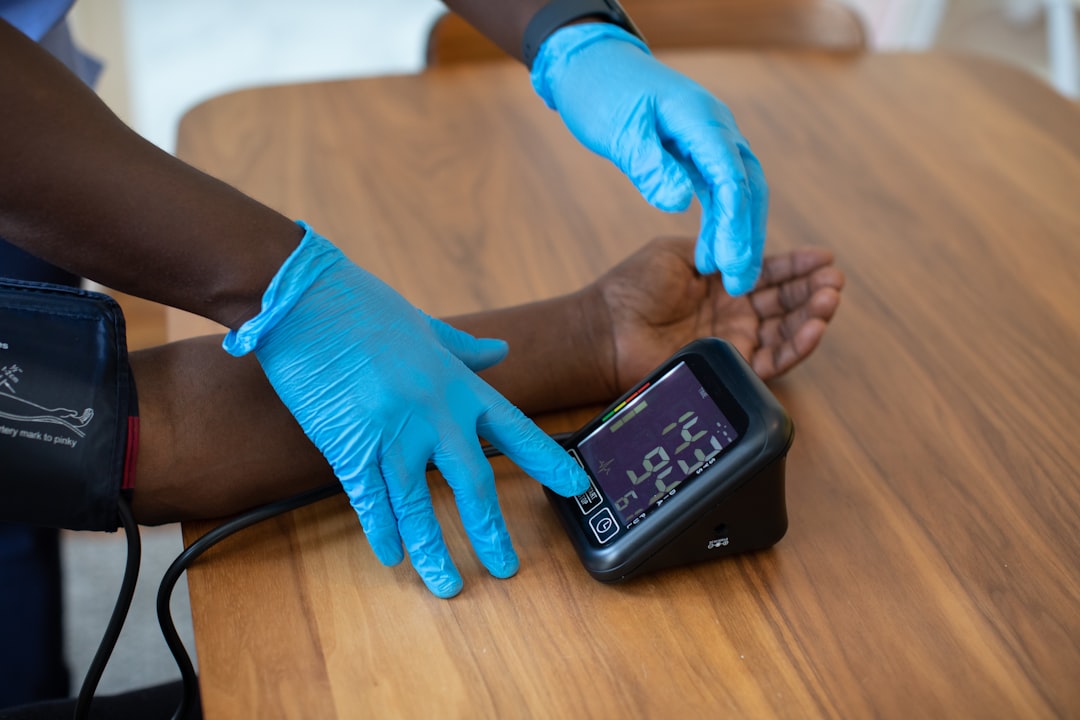
Did a failure in Omnipod or continuous glucose monitor management cause you harm?
Many people living with diabetes describe the same experience: a device was prescribed, a brief explanation was given, and then they were largely left to manage alone. When something went wrong — a dangerous blood sugar crash, a missed alarm, an insulin overdose — they wondered whether they had done something wrong. Often, the failure started long before that moment, in the clinical decisions that surrounded the device itself.
A common pattern — where care can break down
Continuous glucose monitors (CGMs) and insulin pump systems like the Omnipod are powerful tools for managing diabetes. But they require careful clinical oversight. When that oversight fails, patients can suffer serious harm.
Several failure patterns appear repeatedly in cases involving these devices. Understanding them can help you make sense of what happened to you.
Prescribing without proper assessment
A clinician — usually an endocrinologist or GP — decides to place a patient on an Omnipod or CGM system. Before doing so, that clinician should assess whether the patient is a suitable candidate. Relevant factors include the patient’s existing glucose control, their ability to interpret device data, and whether they have support at home.
Some clinicians skip this assessment entirely. Others perform it superficially. When a patient who is not ready for the technology receives it anyway, the risk of harm rises sharply.
Inadequate training and education
Proper training is not optional — it is a clinical requirement. A patient starting on an Omnipod or CGM needs to understand how to insert the device, how to interpret readings, what alarms mean, and what to do when readings fall outside safe ranges.
Diabetes educators and prescribing clinicians share responsibility for this training. When a clinic rushes the process, delegates it to unqualified staff, or simply hands the patient a device with a brochure, that is a failure of care. Patients left without proper education cannot respond safely to device alerts or malfunctions.
Failure to set appropriate alarm thresholds
CGM devices allow clinicians to set alarm thresholds — the glucose levels at which the device alerts the patient. Setting these thresholds correctly is a clinical decision. A threshold set too high may fail to warn a patient before a dangerous hypoglycaemic episode. One set too low may cause alarm fatigue, leading the patient to ignore alerts altogether.
Clinicians who do not individualise these settings to the patient’s specific history and risk profile may be falling below the standard of care.
No follow-up or monitoring plan
Prescribing a device is not the end of the clinician’s responsibility. Ongoing review is essential. A treating team should regularly download and interpret device data, adjust insulin delivery settings, and respond to patterns that suggest the patient is at risk.
Many patients report receiving a device and then hearing nothing from their clinical team for months. During that time, dangerous patterns in their glucose data go unnoticed. The Australian Commission on Safety and Quality in Health Care has identified continuity of care as a core patient safety standard — and gaps in follow-up are a recognised source of preventable harm.
Failure to respond to reported problems
Patients sometimes notice that something is wrong — a reading that does not match how they feel, an alarm that keeps triggering, a cannula that may have failed. When they report these concerns to their clinical team, that team must take them seriously.
Dismissing a patient’s concern about their device can be a critical failure. A clinician who tells a patient their readings are “probably fine” without investigating may be breaching their duty of care.
When things start to go wrong — warning signs that needed attention
Not every problem with a CGM or Omnipod system is immediately obvious. Some warning signs develop slowly. Others appear suddenly. In both cases, a competent clinical team should recognise them and act.
Warning signs that should have prompted clinical action:
• Repeated hypoglycaemic episodes (dangerously low blood sugar) despite device use
• Hyperglycaemic episodes (dangerously high blood sugar) suggesting insulin delivery failure
• Diabetic ketoacidosis (DKA) — a life-threatening complication where the body produces excess acid — occurring while on an insulin pump
• Cannula failures that the patient reported but the clinical team did not investigate
• Sensor readings consistently diverging from fingerprick blood glucose results
• Unexplained weight loss or fatigue in a patient on an automated insulin delivery system
• A patient expressing confusion or distress about device management without receiving adequate support
Each of these signs, on its own, may not indicate negligence. But a clinical team that repeatedly ignores them — or fails to document and respond — may have fallen below the standard a reasonable clinician would meet.
Understanding the Omnipod and CGM: what proper care looks like
The Omnipod is a tubeless insulin pump. It delivers insulin automatically through a small pod worn on the body. Many patients use it alongside a CGM — a sensor worn on the skin that measures glucose levels continuously and sends readings to a receiver or smartphone.
Together, these devices form what is sometimes called a closed-loop or hybrid closed-loop system. The CGM feeds glucose data to the pump, which adjusts insulin delivery in response. For people with Type 1 diabetes in particular, this technology can dramatically improve glucose control and quality of life.
But the technology does not manage itself. Clinicians must prescribe it appropriately, train the patient thoroughly, set the device parameters correctly, and monitor outcomes over time. For general information about diabetes management and device-based therapies, Healthdirect Australia provides accessible, evidence-based guidance.
Key fact: The Omnipod 5 system is the first tubeless automated insulin delivery system approved for use in Australia. It requires clinical setup, individualised programming, and ongoing review.
Key fact: CGM sensors must be calibrated and positioned correctly. A poorly placed sensor can produce inaccurate readings, leading to incorrect insulin dosing decisions.
Key fact: Diabetic ketoacidosis (DKA) can develop within hours of an insulin pump failure. Clinicians must ensure patients know how to recognise and respond to this emergency.
Key fact: In Australia, access to CGM devices through the National Diabetes Services Scheme (NDSS) requires a prescription and clinical oversight. That clinical relationship carries legal obligations.
Why this matters legally
Every clinician who treats a patient owes that patient a duty of care — a legal obligation to provide treatment that meets the standard a competent professional in the same field would meet. This duty applies to GPs, endocrinologists, diabetes educators, and hospital teams who prescribe or manage CGM and Omnipod systems.
Not every bad outcome is negligence. Diabetes is a complex condition. Even with excellent care, patients can experience hypoglycaemic episodes, device malfunctions, or hospitalisation. The law does not require perfection. What it requires is reasonable care.
Negligence occurs when a clinician’s conduct falls below that reasonable standard — and that failure causes harm. A device malfunction alone is not negligence. But a clinician who prescribes a device without training the patient, fails to monitor outcomes, or ignores reported problems may have breached their duty. For a broader explanation of how these principles apply in NSW, see Reframe Legal — Medical Negligence.
A hypoglycaemic episode that occurred despite correct device settings, proper training, and regular clinical review — some risk is inherent in insulin therapy
A patient who developed DKA after reporting a suspected cannula failure that the clinical team dismissed without investigation or follow-up
This is a general educational framework only. Each case is assessed on its individual facts.
When Omnipod or CGM management may amount to medical negligence
The NSW Civil Liability Act 2002 sets the legal framework for negligence claims in this state. In plain terms, it means a court will ask whether a reasonable clinician in the same position would have acted differently — and whether acting differently would have prevented the harm.
Several specific scenarios may give rise to a negligence claim in the context of CGM and Omnipod management.
If a clinician prescribed the Omnipod without assessing your suitability — and you subsequently suffered a serious adverse event — the failure to assess may be the breach that caused your harm.
If no diabetes educator provided structured training — and you experienced a dangerous episode because you did not know how to respond to an alarm or device failure — the absence of training may constitute a breach of the standard of care.
If your clinical team had access to your device data and failed to act on dangerous patterns — such as repeated overnight hypoglycaemia — that failure to act may be the breach that caused lasting harm.
If you reported a problem and the clinical team dismissed it — and you subsequently suffered a preventable complication — the failure to investigate your concern may be the critical failure in your case.
If a hospital team failed to manage your insulin pump correctly during an admission — for example, by continuing pump therapy without appropriate monitoring, or by failing to switch you to a safe alternative — that failure may have caused harm that proper hospital protocols would have prevented.
When harm becomes long-term or permanent
For most people, a single hypoglycaemic episode is frightening but recoverable. Repeated episodes, or a severe episode without timely intervention, can cause lasting damage.
Physical consequences
Severe hypoglycaemia — blood sugar dropping to a dangerously low level — can cause brain injury. Prolonged oxygen deprivation to the brain, even for a short period, can result in cognitive impairment, memory loss, and reduced capacity to work or live independently. Some patients suffer seizures. Others lose consciousness and require emergency hospitalisation.
Diabetic ketoacidosis, when not caught early, can cause organ damage. Kidneys, the heart, and the brain are all vulnerable. A patient who develops DKA because their clinical team failed to respond to a reported device failure may carry the physical consequences for the rest of their life.
Psychological consequences
Living through a severe hypoglycaemic episode is traumatic. Many patients develop anxiety about sleeping, exercising, or being alone. Some develop a condition called hypoglycaemia unawareness — where the body stops producing the usual warning signs of low blood sugar — which makes future episodes even more dangerous.
Fear of technology, loss of trust in the medical system, and post-traumatic stress are all documented consequences of serious device-related harm.
Financial consequences
A patient who suffers brain injury or prolonged hospitalisation may lose the ability to work. Ongoing rehabilitation, specialist care, and home support all carry significant costs. For working-age adults, the financial impact of a preventable harm event can extend across decades.
What compensation can cover in Omnipod and CGM negligence cases
NSW compensation law allows a successful claimant to recover for pain and suffering, lost income, past and future medical expenses, and the cost of care they now require. The amount depends on the severity and permanence of the harm.
| Level of harm | Typical compensation range |
|---|---|
| Moderate injury | $50,000–$150,000 |
| Serious injury | $150,000–$500,000 |
| Severe / life-changing injury | $500,000+ |
Each case is assessed on its own facts. These figures are general ranges only. A patient who suffered a brief hospitalisation and recovered fully will have a very different claim from a patient who sustained permanent cognitive impairment.
Time limits apply in NSW. Generally, a person has three years from the date they knew — or ought reasonably to have known — that they suffered harm as a result of negligence. For some people, that date is not the date of the adverse event itself. Seeking legal clarity early preserves your options.
Bringing it together — do the pieces fit?
You may be reading this because something happened that you cannot fully explain. Perhaps you ended up in hospital. Perhaps you suffered a frightening episode that your clinical team seemed unsurprised by. Perhaps you have been living with consequences that nobody has acknowledged.
The question is not whether the technology failed. The question is whether the people responsible for your care met the standard that the law requires of them.
For a detailed explanation of how negligence claims proceed in NSW, see Reframe Legal — How Medical Negligence Claims Work in NSW.
You don’t need certainty to understand your position
Most people who have experienced harm in a medical context feel uncertain. They wonder whether they misunderstood something. They question whether they should have done more themselves. Many feel guilty for even asking whether something went wrong.
That uncertainty is normal. Legal clarity does not come from certainty — it comes from examining the facts carefully, against the standard of care that applies to this specific clinical situation.
You do not need to know whether negligence occurred before you seek information. What matters is whether the facts, when examined properly, reveal a gap between what happened and what should have happened.
If your situation involved a failure of informed consent — for example, if nobody explained the risks of the device or the consequences of inadequate monitoring — that is a separate but related legal issue. For more on this, see Reframe Legal — Informed Consent and Medical Negligence.
Clinicians who manage CGM and Omnipod therapy in Australia are registered health practitioners. AHPRA — Australian Health Practitioner Regulation Agency maintains the register of practitioners and handles complaints about professional conduct. Understanding your options includes knowing that regulatory and legal pathways can operate separately.
About the lawyer behind this article

Dr Rosemary Listing is a NSW lawyer with a PhD focused on medical negligence. Her academic and legal work centres on the gap between what patients are owed and what they actually receive — particularly in cases involving complex clinical technology and chronic disease management.
Dr Listing has examined cases involving CGM and insulin pump therapy, including situations where patients suffered serious harm after their clinical team failed to provide adequate training, monitoring, or follow-up. In these cases, the harm rarely came from the device itself — it came from the clinical decisions surrounding it.
A recurring theme in this area is that patients blame themselves. They assume they must have done something wrong with the technology. In many cases, the failure happened at the clinical level — in the prescribing decision, the training process, or the absence of any meaningful follow-up plan.
People who seek legal clarity in these situations are not looking to blame anyone. They are trying to understand what happened to them, and whether the care they received met the standard they were entitled to expect.
Dr Listing’s role is to examine the facts of each situation against the clinical standard of care — and to help people understand, clearly and honestly, whether those facts disclose a legal issue worth pursuing.
This article is general legal information only. It does not constitute legal advice. Each person’s circumstances are different. The law discussed applies to New South Wales, Australia. Time limits apply to legal claims.