
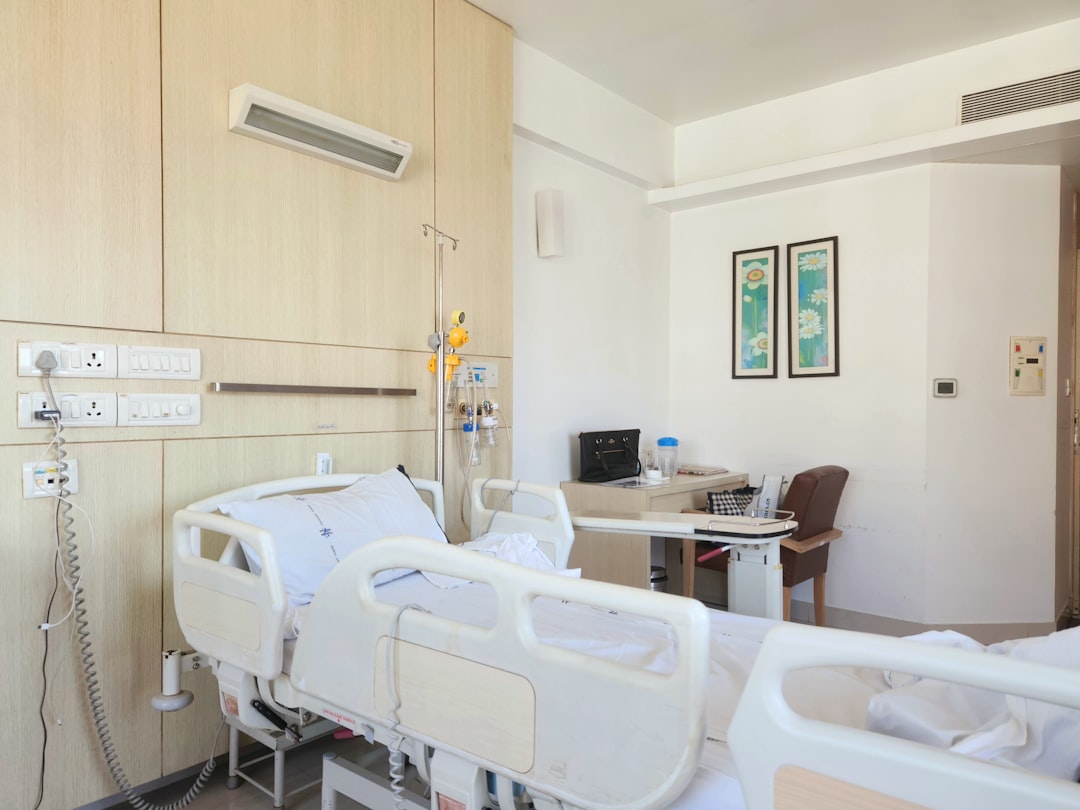
Did your NexGen knee implant fail — and did your surgeon miss the signs?
Surgeon assesses patient suitability and selects appropriate NexGen implant component
Implant correctly sized, aligned, and cemented or press-fitted during surgery
Post-operative imaging confirms correct positioning; patient monitored at follow-up appointments
New or worsening symptoms investigated promptly with X-ray or CT scan to detect loosening or failure
Timely revision surgery planned if implant failure confirmed, minimising bone loss and further harm
If a surgeon skipped or delayed any of these steps after you reported new symptoms, that gap may be legally significant.
Understanding the NexGen knee implant: what normally happens
A knee replacement — also called total knee arthroplasty — replaces the damaged surfaces of the knee joint with artificial components. The NexGen system, manufactured by Zimmer Biomet, was one of the most widely used knee replacement systems in Australia and globally. Surgeons implanted it in hundreds of thousands of patients over several decades.
The NexGen system includes a femoral component (attached to the thigh bone), a tibial component (attached to the shin bone), and a plastic spacer between them. Each component must fit correctly, sit at the right angle, and bond securely to the bone — either through cement or a press-fit technique.
Most patients expect some pain and stiffness in the weeks after surgery. Physiotherapy helps restore movement. Within three to six months, most people return to daily activities with significantly less pain than before. For further general information about knee replacement surgery, Healthdirect Australia provides a reliable starting point.
Key fact: The NexGen Legacy Posterior Stabilised Flex implant attracted significant legal scrutiny in the United States, with thousands of patients reporting early loosening of the tibial component.
Key fact: Australian orthopaedic surgeons implanted NexGen devices widely from the 1990s through to the 2010s. Many patients are only now experiencing failure.
Key fact: Implant failure does not always mean the device was defective. Surgical technique, patient selection, and post-operative monitoring all play a role in outcomes.
Key fact: The Australian Orthopaedic Association National Joint Replacement Registry tracks revision rates — and NexGen tibial components showed higher-than-average early revision rates in some studies.
When things start to go wrong
Some pain after knee replacement surgery is expected. But certain symptoms signal something more serious. Patients and their treating doctors both need to recognise the difference between normal recovery and early implant failure.
Warning signs that should have prompted urgent investigation:
• Persistent or worsening knee pain beyond three to six months after surgery
• Pain that returns after a period of improvement — sometimes called a “honeymoon period” followed by decline
• Swelling that does not settle with rest or anti-inflammatory medication
• A feeling of instability, giving way, or the knee “not feeling right”
• Clicking, clunking, or grinding sensations inside the joint
• Difficulty bearing weight or walking distances that were previously manageable
• Visible changes in leg alignment or the appearance of the knee
• Fever, redness, or warmth around the joint — which may indicate infection
Any of these symptoms, reported to a surgeon or GP, should trigger imaging. A plain X-ray is usually the first step. Sometimes a CT scan or bone scan provides more detail. Dismissing these symptoms as “normal post-operative discomfort” without investigation is a pattern that appears repeatedly in failed implant cases.
A common pattern — where care can break down
NexGen implant failure cases tend to follow recognisable patterns. Understanding these patterns helps you assess whether what happened to you fell within the range of acceptable care — or outside it.
Wrong implant selection or sizing
Before surgery, the surgeon must assess the patient’s anatomy carefully. Selecting an implant that is too large, too small, or poorly matched to the patient’s bone structure increases the risk of early loosening. Some patients were not suitable candidates for certain NexGen components — particularly those with high activity levels, significant obesity, or specific bone geometry — and a thorough pre-operative assessment should have identified this.
Surgical technique errors
Correct alignment of the implant is critical. Even a few degrees of malalignment can dramatically increase wear on the plastic spacer and accelerate loosening. The surgeon must also prepare the bone surface correctly before cementing or press-fitting the components. Inadequate bone preparation, incorrect cement technique, or failure to achieve proper fixation during the operation can all cause premature failure.
Failure to investigate new symptoms
This is perhaps the most common failure pattern in NexGen cases. A patient returns to their surgeon reporting new pain, instability, or swelling. The surgeon reassures them without ordering imaging. Months — sometimes years — pass before anyone identifies that the tibial component has loosened or migrated. By that point, the patient has lost bone stock, making revision surgery far more complex and the outcome less certain.
The Australian Commission on Safety and Quality in Health Care sets national standards for clinical assessment and patient follow-up. Failing to investigate reported symptoms against those standards may constitute a breach of the duty of care.
Delayed referral for revision surgery
Once imaging confirms implant loosening or failure, the surgeon must act. Delaying revision surgery — even by several months — allows further bone loss to occur. Greater bone loss means the revision surgeon has less to work with, the procedure carries higher risk, and the patient’s long-term outcome worsens. A surgeon who identifies failure but delays action without clear clinical justification may have caused harm that was avoidable.
Failure to warn about known risks
Before surgery, the surgeon must explain the risks of the procedure in a way the patient can understand. This includes the risk of early loosening, the possibility of revision surgery, and — where relevant — any known concerns about the specific implant being used. Patients who were not told about elevated revision rates associated with certain NexGen components may have a separate claim based on failure to obtain informed consent.
Why this matters legally
Every surgeon who treats a patient owes that patient a duty of care — a legal obligation to provide treatment that meets the standard of a competent practitioner in the same field. This duty does not guarantee a perfect outcome. Knee replacement surgery carries real risks, and not every complication means someone acted negligently.
The legal question is narrower: did the surgeon — or any other treating clinician — fall below the standard that a reasonable, competent orthopaedic surgeon would have met in the same circumstances? If the answer is yes, and that failure caused harm that would not otherwise have occurred, the law may provide a remedy.
In NexGen cases, the most common legal issues involve failure to investigate symptoms, delayed diagnosis of loosening, inadequate pre-operative assessment, and failure to warn. Each of these can form the basis of a negligence claim if the facts support it. For a broader overview of how medical negligence law works in NSW, Reframe Legal — Medical Negligence provides detailed information.
A NexGen implant that loosened despite correct surgical technique, appropriate patient selection, and prompt investigation of symptoms — some implants fail within acceptable statistical rates
A surgeon who dismissed repeated reports of pain and instability for 18 months without ordering imaging, during which time the tibial component migrated and caused significant bone loss requiring complex revision surgery
This is a general educational framework only. Each case is assessed on its individual facts.
When a NexGen implant failure may amount to medical negligence
Not every failed knee replacement gives rise to a legal claim. But certain scenarios, when the facts support them, may cross the line into negligence under NSW law.
Scenarios that may indicate negligence
If your surgeon implanted a NexGen component that was poorly suited to your anatomy or activity level — and a competent surgeon reviewing your pre-operative scans would have chosen differently — that selection decision may constitute a breach of duty.
If you reported pain, instability, or swelling at follow-up appointments and your surgeon dismissed those symptoms without ordering X-rays or other imaging, that failure to investigate may have allowed loosening to progress unchecked. Earlier detection would have enabled earlier intervention with better outcomes.
If your surgeon identified loosening on imaging but delayed scheduling revision surgery for months without clinical justification, and that delay caused additional bone loss, the delay itself may be the source of your harm.
If nobody told you before surgery that certain NexGen components had higher-than-average revision rates — and you would have chosen a different implant or a different surgeon had you known — a failure of informed consent may also be relevant.
In NSW, the Civil Liability Act 2002 governs medical negligence claims. This legislation sets out how courts assess whether a clinician’s conduct fell below the standard of a reasonable practitioner, and how they measure the harm that resulted. The Act also sets time limits — generally three years from the date you knew, or ought to have known, that you had a potential claim.
When harm becomes long-term or permanent
A failed NexGen implant that goes undetected or untreated for a significant period causes harm that compounds over time. Understanding the full scope of that harm matters — both for your own wellbeing and for any legal assessment of your situation.
Physical consequences
Bone loss is the most serious physical consequence of delayed diagnosis. As a loose tibial component moves, it erodes the surrounding bone. By the time revision surgery occurs, the surgeon may find insufficient bone to anchor a standard revision implant. This forces the use of more complex components — stems, wedges, or augments — which carry higher surgical risk and longer recovery times. Some patients require multiple revision surgeries. A small number face the possibility of amputation in the most severe cases.
Beyond bone loss, patients experience chronic pain, reduced mobility, and ongoing instability. Many develop secondary problems in the hip, lower back, and opposite knee from compensating for the failing joint.
Psychological consequences
Living with unexplained pain — especially after being told repeatedly that nothing is wrong — takes a significant psychological toll. Many patients describe feelings of self-doubt, anxiety, and depression. Some develop a fear of medical settings that makes it harder to seek help. The experience of not being believed is itself a form of harm that courts in NSW recognise.
Financial consequences
Revision surgery is expensive. Recovery takes longer than the original procedure. Many patients lose income during extended rehabilitation. Some cannot return to their previous occupation at all. Ongoing physiotherapy, pain management, and aids or modifications to the home add further costs that accumulate over years.
Bone stock is preserved
Recovery time is shorter
Risk of complications is lower
Long-term function is better
Significant bone loss may be irreversible
Recovery is longer and more difficult
Risk of infection and further failure increases
Long-term function is often permanently reduced
What compensation can cover in NexGen implant failure cases
NSW law allows people who have suffered harm through medical negligence to seek compensation for the losses that harm caused. Compensation in these cases typically covers several categories of loss.
General damages cover pain and suffering, loss of enjoyment of life, and the impact on your daily activities. Special damages cover out-of-pocket expenses — including the cost of revision surgery, physiotherapy, medications, and any aids or home modifications you needed. Lost income covers wages or earnings you could not earn during recovery. Future care costs cover ongoing treatment and assistance you will need going forward.
| Level of harm | Typical compensation range |
|---|---|
| Moderate injury | $50,000–$150,000 |
| Serious injury | $150,000–$500,000 |
| Severe / life-changing injury | $500,000+ |
Each case is assessed on its own facts. These figures are general ranges only. The amount in any individual case depends on the nature and extent of the harm, the patient’s age and circumstances, and the strength of the evidence linking the clinical failure to the outcome.
Time limits apply in NSW. Generally, a person has three years from the date they knew — or ought reasonably to have known — that they had a potential claim. In some cases involving delayed discovery of harm, this period may run from a later date. Acting promptly preserves your options.
Bringing it together — do the pieces fit?
You may be reading this article because something feels wrong. Perhaps you are in more pain than you expected. Perhaps your surgeon has now told you that you need revision surgery. Perhaps you have been dismissed at appointments and you are not sure whether that dismissal was reasonable.
The following questions may help you think through what happened more clearly.
Connecting these dots — what happened, what should have happened, and what the gap between them cost you — is the foundation of any legal assessment. Reframe Legal — How Medical Negligence Claims Work in NSW explains that process in plain language.
You don’t need certainty to understand your position
Many people who have experienced a failed NexGen implant spend months — sometimes years — doubting themselves. They wonder whether they are being too sensitive about the pain. They assume the surgeon must have done everything right. They feel guilty for questioning a medical professional.
That self-doubt is understandable. But legal clarity does not require certainty. It requires facts. What symptoms did you report? When did you report them? What did the surgeon do in response? What do the imaging results show? These are questions that a careful examination of your medical records can answer.
Understanding informed consent is also important in these cases. Before any surgery, your surgeon must explain the material risks in a way that allows you to make a genuine choice. If the surgeon did not disclose known concerns about the NexGen system, that failure may be legally significant. Reframe Legal — Informed Consent and Medical Negligence explains how this area of law works.
If you have concerns about a specific practitioner’s conduct, AHPRA — Australian Health Practitioner Regulation Agency handles complaints about registered health practitioners in Australia. A complaint to AHPRA is separate from a legal claim and does not affect your right to pursue compensation.
About the lawyer behind this article

Dr Rosemary Listing is a NSW lawyer with a PhD focused on medical negligence. Her academic and clinical background gives her an unusually detailed understanding of how orthopaedic care is supposed to work — and where it sometimes falls short.
Dr Listing has worked with clients whose NexGen knee implants failed after years of dismissed symptoms. In many of those cases, the harm did not come from the implant alone. It came from the months or years during which a surgeon failed to investigate, failed to act, or failed to refer — and during which the patient’s condition quietly worsened.
Her experience in these cases has shown that delay is often the central issue. A loosening implant caught at six months causes far less harm than one identified at two years. The question she examines is whether that delay was clinically justifiable — or whether it represented a failure of the standard of care.
Clients who approach Dr Listing are not always looking to blame anyone. Many simply want to understand what happened to them and whether the care they received was reasonable. That is a legitimate question — and one that deserves a careful, honest answer based on the evidence.
Dr Listing’s role is to examine the clinical record, assess it against the standard expected of a competent orthopaedic surgeon, and give her clients a clear picture of where they stand.
This article is general legal information only. It does not constitute legal advice. Each person’s circumstances are different. The law discussed applies to New South Wales, Australia. Time limits apply to legal claims.