
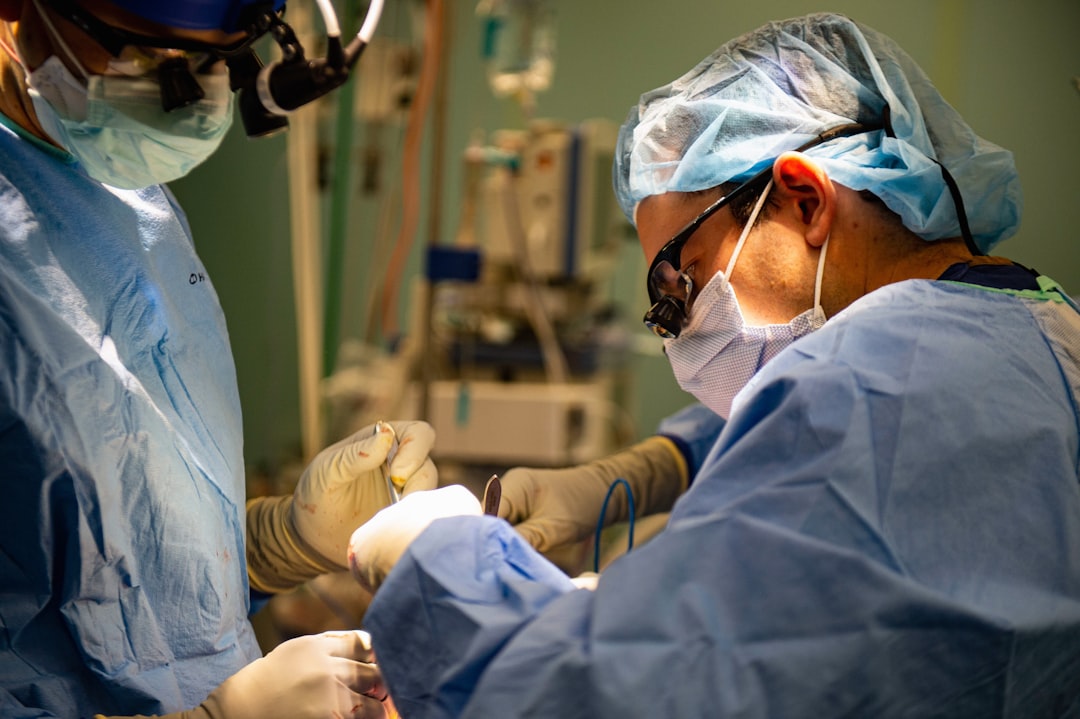
Why does spinal fusion hardware fail — and what should patients have been told?
Pre-operative assessment: bone density, anatomy, and patient risk factors reviewed
Informed consent: hardware risks, failure rates, and alternatives explained to patient
Surgery: correct implant selection, accurate screw placement, intraoperative imaging used
Post-operative monitoring: imaging reviewed, new pain or neurological symptoms investigated promptly
Hardware complication identified early, revision surgery or management plan offered in time
When any of these steps is skipped or poorly performed, a hardware complication that might have been prevented — or caught early — can cause lasting harm.
Understanding spinal fusion hardware: what it is and what normally happens
Spinal fusion surgery joins two or more vertebrae — the bones of the spine — so they grow together into a single, solid unit. Surgeons use metal implants to hold everything in place while that fusion happens. The hardware typically includes pedicle screws (inserted into the bony arch of each vertebra), connecting rods, and sometimes cages or plates.
The goal is to eliminate painful movement at a damaged or unstable spinal segment. Surgeons recommend fusion for conditions including degenerative disc disease, spondylolisthesis (where one vertebra slips forward over another), spinal stenosis, and fractures.
What the hardware actually does
Metal implants do not fuse the spine on their own. Instead, they act as a scaffold — holding the vertebrae in the correct position while the body grows new bone across the joint. Once fusion is complete, the hardware is technically redundant. Most surgeons leave it in place permanently unless it causes problems.
Fusion typically takes between three months and one year to consolidate. During that window, the hardware bears significant mechanical load. Any factor that slows or prevents bone growth — poor bone density, smoking, infection, or inadequate immobilisation — puts extra stress on the implants.
Fusion rates: Studies suggest that between 5% and 20% of spinal fusions do not achieve solid bone union, depending on the number of levels fused and patient risk factors.
Hardware failure rates: Rod fracture occurs in roughly 2–14% of lumbar fusion cases, with higher rates in long-segment constructs.
Revision surgery: Around 10–15% of spinal fusion patients require a second operation within five years, often related to hardware complications or adjacent segment disease.
Informed consent matters: Australian guidelines require surgeons to discuss material risks — including hardware failure — before a patient agrees to surgery.
For more general information about spinal conditions and surgery, Healthdirect Australia provides reliable, plain-language health information for Australian patients.
When things start to go wrong
Hardware complications do not always announce themselves dramatically. Many patients notice a gradual return of pain months or years after surgery and assume it is simply part of recovery. Others experience sudden, sharp new symptoms that feel different from their original condition.
Knowing the difference between expected post-surgical discomfort and a genuine warning sign matters — because early detection of hardware failure can change the outcome significantly.
Warning signs that should prompt urgent review:
• New or worsening back or leg pain after a period of improvement
• A sudden change in the character of pain — sharper, deeper, or different from before
• Numbness, tingling, or weakness in the legs or feet that was not present before
• Difficulty walking, loss of balance, or changes in bladder or bowel control
• A palpable lump, clicking sensation, or visible change near the surgical site
• Fever, redness, or discharge at the wound site (which may indicate infection around hardware)
• Pain that worsens with activity and does not settle with rest
None of these symptoms automatically means hardware has failed. But each one warrants imaging — typically X-ray, CT scan, or MRI — to check the position and integrity of the implants. A surgeon who dismisses new neurological symptoms without ordering imaging is not following accepted practice.
Soreness and stiffness at the surgical site for several weeks
Gradual, steady improvement in pain over months
Mild aching with increased activity during recovery
Some residual discomfort at adjacent spinal levels
Pain that returns or worsens after a clear period of improvement
New leg weakness, numbness, or loss of bladder/bowel control
Sudden severe pain following minor activity or movement
Signs of infection: fever, swelling, wound breakdown
A common pattern — where care can break down
Hardware complications after spinal fusion can arise from several distinct failure points. Some involve decisions made before the patient entered the operating theatre. Others involve what happened during surgery. Still others involve what the treating team did — or did not do — in the months that followed.
Failure to assess bone quality before surgery
Osteoporosis — reduced bone density — significantly increases the risk of screw loosening and pullout. A surgeon who does not assess bone density before recommending fusion in an older patient, or a patient on long-term corticosteroids, may be placing hardware into bone that cannot hold it. Pre-operative DEXA scanning (a bone density test) is a recognised step in assessing surgical risk.
Incorrect screw placement
Pedicle screws must pass through a narrow bony corridor. A misplaced screw can breach the spinal canal, damage nerve roots, or fail to achieve adequate purchase in the bone. Intraoperative imaging — fluoroscopy or CT-based navigation — helps surgeons confirm placement in real time. Some surgeons skip this step or rely on tactile feel alone, which increases the risk of malposition.
Wrong implant selection
Not every implant suits every patient. A construct designed for a two-level fusion may not provide adequate stability for a four-level fusion. Surgeons who select hardware without accounting for the patient’s anatomy, weight, activity level, or bone quality may create a mechanical environment where failure is predictable.
Failure to investigate new symptoms promptly
When a patient reports new pain or neurological symptoms after fusion, the treating surgeon should arrange imaging promptly. Delayed investigation allows hardware complications — including screw loosening, rod fracture, or implant migration — to progress to a point where revision surgery becomes more complex and outcomes worse.
Inadequate informed consent about device risks
Australian law requires surgeons to tell patients about material risks before surgery. A material risk is one that a reasonable patient in that person’s position would want to know about. Hardware failure, the possibility of revision surgery, and the specific risks associated with the patient’s bone quality or anatomy are all material risks in spinal fusion. A surgeon who does not discuss these risks before obtaining consent has not met the standard the law requires.
The Australian Commission on Safety and Quality in Health Care sets national standards for surgical safety, including requirements around informed consent and implant documentation.
Why this matters legally
Every surgeon who operates on a patient in Australia owes that patient a duty of care — a legal obligation to provide treatment that meets the standard of a competent practitioner in the same field. This duty applies not only to the surgery itself but to the pre-operative assessment, the consent process, and the post-operative follow-up.
Not every hardware complication amounts to negligence. Negligence — in the legal sense — means a failure to meet the standard of reasonable care that caused harm the patient would not otherwise have suffered. A screw that loosens in a patient with severe osteoporosis, despite a careful pre-operative assessment and a thorough consent discussion, may simply be an accepted risk of a difficult surgery. That is different from a screw that loosens because the surgeon never checked the patient’s bone density, never told the patient about the risk, and then dismissed the patient’s pain for six months before ordering imaging.
The distinction matters. It is the difference between a known complication and a preventable one. For more on how Australian law approaches this distinction, see Reframe Legal — Medical Negligence.
A pedicle screw loosens in a patient with known severe osteoporosis, despite pre-operative bone density assessment and a full consent discussion about hardware failure risk
A screw breaches the spinal canal because the surgeon did not use intraoperative imaging, and the patient develops permanent nerve damage that imaging-guided placement would have prevented
This is a general educational framework only. Each case is assessed on its individual facts.
When hardware complications after spinal fusion may amount to medical negligence
The NSW Civil Liability Act 2002 sets the legal framework for medical negligence claims in this state. Under that Act, a court asks whether a competent practitioner in the same specialty, acting reasonably, would have done what this surgeon did. The Act also requires that the patient’s harm was caused by the departure from that standard — not simply that a complication occurred.
Scenarios that may support a legal claim
If a surgeon recommended spinal fusion without assessing bone density in a patient with known risk factors for osteoporosis, and screws subsequently pulled out causing nerve damage, the failure to assess may constitute a breach of the standard of care.
If intraoperative imaging was available but the surgeon chose not to use it, and a misplaced screw caused nerve root injury, the decision not to use available safety tools may be relevant to whether the standard was met.
If a patient reported new leg weakness after surgery and the treating team dismissed it for weeks without imaging, and that delay allowed a hardware complication to progress to permanent nerve damage, the delay itself may be the actionable failure — not the original complication.
If a surgeon did not tell a patient about the risk of hardware failure, the possibility of revision surgery, or the specific risks associated with that patient’s anatomy or bone quality, the consent process may not have met the standard the law requires. Patients who were not given material information cannot make a genuinely informed decision about whether to proceed.
When harm becomes long-term or permanent
Hardware complications that go undetected or untreated can cause harm that extends well beyond the original surgical problem. Understanding how harm escalates helps patients — and their families — make sense of what they are living with.
Physical consequences
A misplaced or migrating screw can compress nerve roots or the spinal cord itself. Depending on the level of the spine affected, this can cause chronic pain, weakness, numbness, or loss of function in the legs. Some patients develop cauda equina syndrome — a serious condition where compression of the nerve bundle at the base of the spine causes loss of bladder and bowel control. Cauda equina syndrome is a surgical emergency, and delayed treatment can result in permanent incontinence and paralysis.
Rod fracture, when undetected, allows the fused segment to move again. That movement causes pain and can accelerate degeneration at adjacent spinal levels, sometimes requiring further surgery at those levels.
Psychological consequences
Patients who undergo revision surgery after a failed fusion often describe a profound loss of trust in the medical system. Many develop anxiety about further procedures. Chronic pain — particularly when its cause went unrecognised for months — is strongly associated with depression, sleep disruption, and social withdrawal. These are real, measurable harms.
Financial consequences
Revision spinal surgery is expensive. Recovery takes months. Many patients cannot return to their previous employment, particularly if their work involved physical activity. Lost income, ongoing treatment costs, and the need for long-term pain management can accumulate into significant financial hardship — especially when the original complication could have been identified and addressed earlier.
What compensation can cover in spinal fusion hardware complication cases
In NSW, a successful medical negligence claim can cover several categories of loss. These include pain and suffering, lost income (past and future), the cost of medical treatment and rehabilitation, and the cost of care and assistance at home. Where a patient requires revision surgery, the cost of that surgery and its recovery period may also form part of the claim.
| Level of harm | Typical compensation range |
|---|---|
| Moderate injury | $50,000–$150,000 |
| Serious injury | $150,000–$500,000 |
| Severe / life-changing injury | $500,000+ |
Each case is assessed on its own facts. These figures are general ranges only. The severity of nerve damage, the number of revision surgeries required, the patient’s age and employment history, and the degree to which the complication was preventable all affect the final figure.
Time limits apply in NSW. Generally, a person has three years from the date they knew — or ought reasonably to have known — that they had a potential claim. For some patients, that date is not the surgery itself but the moment a second opinion revealed what had gone wrong.
Bringing it together — do the pieces fit?
If you have read this far, you may be trying to work out whether your experience fits a pattern that warrants closer examination. The questions below are not legal tests. They are prompts to help you think clearly about what happened.
For a plain-language explanation of how the legal process works in NSW, see Reframe Legal — How Medical Negligence Claims Work in NSW.
You don’t need certainty to understand your position
Many people who experienced a hardware complication after spinal fusion spend months — sometimes years — wondering whether what happened to them was normal. Surgeons often frame complications as expected risks. Patients, who are not trained in spinal surgery, have no easy way to know whether that framing is accurate.
Legal clarity does not require you to be certain something went wrong. It requires an examination of the facts: what the surgeon knew before operating, what they told you, what the imaging shows, and what a competent surgeon in the same position would have done differently. That examination is something a lawyer with experience in spinal surgery cases can help you undertake.
Informed consent is a specific area of law in its own right. If you were not told about material risks before surgery — including hardware failure and revision surgery rates — that may be a separate basis for a claim, independent of whether the surgery itself was performed correctly. For more on this, see Reframe Legal — Informed Consent and Medical Negligence.
If you want to understand whether your treating surgeon’s registration is current or whether any complaints have been made against them, AHPRA — Australian Health Practitioner Regulation Agency maintains a public register of all registered health practitioners in Australia.
About the lawyer behind this article

Dr Rosemary Listing is a NSW lawyer with a PhD in medical negligence. Her academic and legal work focuses on the gap between what patients are told and what actually happens to them — a gap that is particularly visible in complex spinal surgery cases.
Rosemary has worked with clients whose hardware complications were dismissed for months before imaging confirmed what they already suspected. In those cases, the harm often came not from the original complication but from the delay in recognising and addressing it. That distinction — between a known risk and a preventable harm — sits at the centre of most spinal fusion negligence cases.
Her work in this area also involves informed consent. Many patients who come to her did not receive a meaningful explanation of hardware failure rates, revision surgery risks, or the specific implications of their bone density or anatomy before agreeing to surgery. Understanding what you should have been told is often the first step in understanding whether your care fell short.
Clients who approach Rosemary are not looking to blame anyone for a difficult outcome. Most want to understand what happened and whether it could have been different. Her role is to examine the clinical record, the consent documentation, and the surgical decisions against the standard a competent spinal surgeon would have met.
Rosemary practises in NSW and accepts matters from across the state. Her focus is on giving people a clear, honest assessment of where they stand — before they decide what, if anything, to do next.
This article is general legal information only. It does not constitute legal advice. Each person’s circumstances are different. The law discussed applies to New South Wales, Australia. Time limits apply to legal claims.