
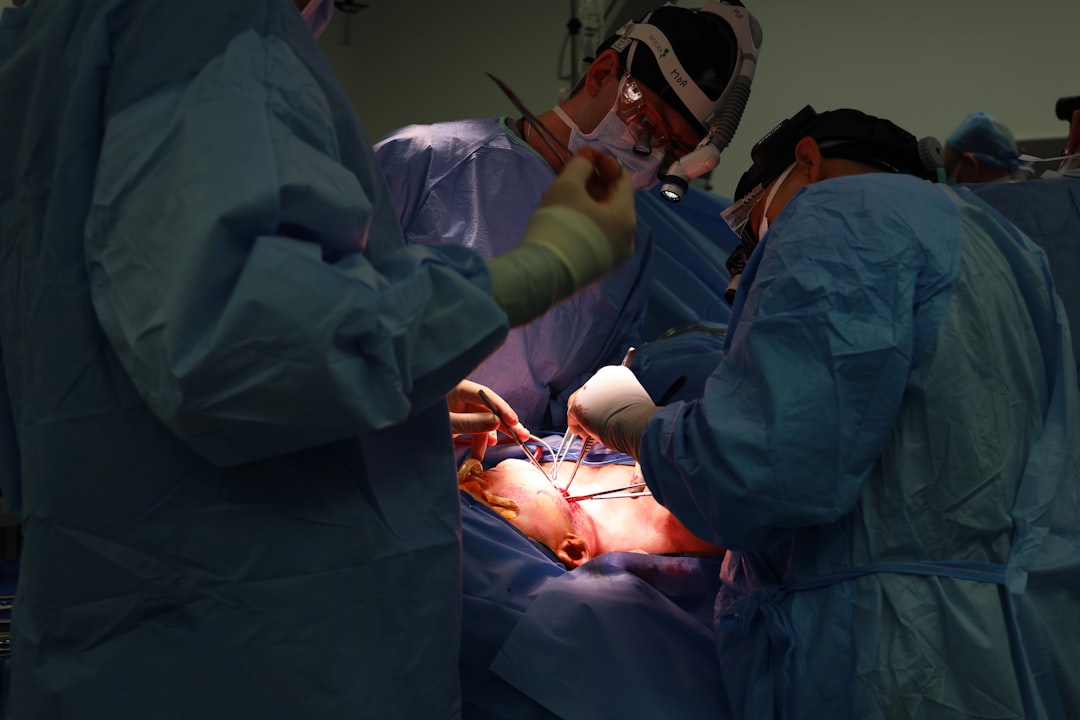
What should you ask before revision surgery — and what happens when your surgeon doesn’t answer?
Surgeon identifies why the first procedure failed or produced a poor outcome
Surgeon explains the reason for revision, the risks, and all available alternatives
Patient receives time to consider, ask questions, and seek a second opinion
Patient gives informed, voluntary consent before the revision procedure begins
Revision surgery proceeds with full documentation and appropriate post-operative monitoring
If your surgeon skipped any of these steps before your revision procedure, the consent process may have been legally inadequate.
Understanding revision surgery: what normally happens
Revision surgery is a second or subsequent operation performed to correct, repair, or improve the result of an earlier procedure. Surgeons perform revision operations across many fields — orthopaedics, gynaecology, cardiac surgery, bariatric surgery, and cosmetic surgery among them.
Sometimes revision surgery is genuinely unavoidable. Bodies heal unpredictably. Complications arise even when a surgeon does everything correctly. But in other cases, revision surgery becomes necessary because the first procedure was performed poorly, or because a complication went unrecognised for too long.
Before any revision procedure, a competent surgeon must explain what went wrong, why another operation is the recommended path, what the risks of that operation are, and what alternatives exist. For more general information about surgical procedures and recovery, Healthdirect Australia provides accessible, evidence-based guidance.
Key fact: Revision surgery carries higher risks than primary surgery in most specialties — scar tissue, altered anatomy, and prior complications all increase the difficulty.
Key fact: Informed consent — meaning your genuine understanding and agreement — is legally required before every surgical procedure, including revision operations.
Key fact: A surgeon who performs revision surgery without explaining why the first procedure failed may have breached their duty of disclosure.
Key fact: Patients in NSW have the right to seek a second opinion before agreeing to any elective or semi-elective revision procedure.
When things start to go wrong — warning signs before and after revision surgery
Not every difficult recovery signals negligence. But certain patterns suggest that something more serious has occurred — either in the original procedure, in the decision to perform revision surgery, or in the consent process leading up to it.
Warning signs that should prompt careful reflection:
• Your surgeon did not clearly explain why the first operation failed before recommending revision
• Nobody offered you a second opinion or told you that one was available
• The surgeon pressured you to agree to revision surgery quickly, without time to think
• Your consent form listed risks that your surgeon never discussed with you verbally
• The revision surgery produced the same poor outcome as the first procedure
• Your surgeon dismissed your concerns about pain, function, or recovery after the revision
• Nobody told you that the revision itself carried significantly higher risks than the original operation
• Post-operative complications after the revision went unmonitored or untreated
These warning signs do not automatically mean negligence occurred. But each one represents a point where the standard of care may have fallen short. Recognising them is the first step toward understanding your position.
A common pattern — where care can break down in revision surgery
Revision surgery cases follow recognisable patterns. Understanding these patterns helps you identify whether what happened to you fits a known failure type.
Failure to explain why revision was needed
A surgeon must tell you why the first procedure produced a poor result before recommending a second one. When a surgeon simply schedules revision surgery without this explanation, the patient cannot make a genuinely informed decision. Many patients later discover that the original failure resulted from a surgical error — something their surgeon never disclosed.
Inadequate consent for the revision procedure itself
Informed consent means more than signing a form. Your surgeon must explain the specific risks of the revision operation — which are often greater than those of the original procedure — in language you can understand. Handing you a consent form in a pre-admission clinic five minutes before surgery does not satisfy this legal obligation.
Failure to offer alternatives
Revision surgery is not always the only option. Conservative management, physiotherapy, pain management, or watchful waiting may be appropriate alternatives in some cases. A surgeon who presents revision surgery as the only path, without discussing alternatives, may have failed their duty of disclosure.
Performing revision surgery without addressing the root cause
When a surgeon performs revision surgery without first identifying and correcting the underlying cause of the original failure, the revision is likely to produce the same poor result. This pattern — operating again without understanding why the first operation failed — represents a significant departure from accepted surgical practice. The Australian Commission on Safety and Quality in Health Care has published standards specifically addressing the need for root-cause analysis before repeat procedures.
Inadequate post-operative monitoring after revision
Revision surgery patients require closer monitoring than primary surgery patients. Scar tissue, altered anatomy, and prior complications all increase the risk of post-operative problems. A clinical team that discharges a revision patient too early, or fails to respond to post-operative warning signs, may have breached the standard of care.
Why this matters legally
Every surgeon in Australia owes their patient a duty of care — a legal obligation to provide treatment that meets the standard of a competent practitioner in that specialty. This duty does not disappear when a first procedure goes wrong. In fact, it becomes more demanding.
Not every complication after revision surgery amounts to negligence. Revision procedures are inherently more complex, and some complications are unavoidable even with perfect technique. The legal question is not whether something went wrong — it is whether the surgeon acted as a reasonable, competent surgeon would have acted in the same circumstances.
Reasonable care in the revision surgery context includes honest disclosure of what went wrong the first time, a thorough explanation of the revision procedure and its risks, genuine time for the patient to consider their options, and appropriate post-operative monitoring. When any of these elements is missing, the care may fall below the legal standard. For a detailed explanation of how medical negligence law works in NSW, visit Reframe Legal — Medical Negligence.
A revision procedure that was properly explained and consented to, but which still produced a poor outcome due to the inherent complexity of the patient’s anatomy
A surgeon who performed revision surgery without disclosing that the original failure resulted from a surgical error, and without explaining the significantly elevated risks of the revision procedure
This is a general educational framework only. Each case is assessed on its individual facts.
When revision surgery may amount to medical negligence
The NSW Civil Liability Act 2002 sets the legal framework for medical negligence claims in this state. In plain terms, it means that a health professional is not automatically liable for a bad outcome — but they are liable when their conduct fell below the standard of a competent peer, and that failure caused measurable harm.
Consent failures specific to revision surgery
If your surgeon recommended revision surgery without telling you that the first procedure failed because of a surgical error, that omission may constitute a breach of the duty of disclosure. Patients have a legal right to know the cause of their harm before agreeing to further treatment.
Similarly, if your surgeon failed to tell you that the revision procedure carried significantly higher risks than the original operation — and you would have declined or delayed the revision had you known — the consent process may have been legally defective.
Technical failures during revision surgery
A surgeon who performs revision surgery using the same technique that produced the original failure, without modification or specialist input, may have breached the standard of care. Revision procedures often require specialist expertise beyond that needed for primary surgery. Referring a patient to a more experienced surgeon is sometimes the correct clinical decision — and failing to do so can itself constitute negligence.
Delayed recognition of revision surgery complications
When a clinical team fails to recognise or respond to complications after revision surgery — infection, implant failure, nerve damage, haemorrhage — and that delay causes additional harm, the team may have breached their post-operative duty of care.
When harm becomes long-term or permanent
Patients who undergo unnecessary or poorly performed revision surgery often face consequences that extend far beyond the operating theatre. Understanding the full scope of that harm matters — both for your health decisions and for any legal assessment of your situation.
Physically, failed revision surgery can produce chronic pain, reduced mobility, permanent nerve damage, organ dysfunction, or the need for further corrective procedures. Each additional operation increases the risk of complications and reduces the likelihood of a full recovery.
Psychologically, the experience of a second surgical failure is often more damaging than the first. Many patients describe a profound loss of trust in the medical system, anxiety about further treatment, and symptoms consistent with post-traumatic stress. These psychological consequences are legally recognised as compensable harm in NSW.
Financially, the consequences compound quickly. Lost income during extended recovery, the cost of private rehabilitation, ongoing medication, and the expense of seeking further specialist opinions all accumulate. For patients who cannot return to their previous employment, the financial impact can be permanent.
Chronic pain at the surgical site
Reduced range of movement or function
Permanent nerve or tissue damage
Need for further corrective procedures
Increased surgical risk with each subsequent operation
Loss of trust in medical providers
Anxiety, depression, or post-traumatic symptoms
Extended time away from work
Ongoing rehabilitation and medication costs
Permanent reduction in earning capacity
What compensation can cover in revision surgery cases
NSW law allows patients who have suffered harm through medical negligence to seek compensation for a range of losses. This includes pain and suffering, lost income (past and future), the cost of ongoing medical treatment, rehabilitation expenses, and the cost of care provided by family members.
In revision surgery cases, compensation often reflects the compounded nature of the harm — the patient has suffered not just one surgical failure, but the consequences of a second procedure that should not have been necessary, or that was performed without proper consent or skill.
| Level of harm | Typical compensation range |
|---|---|
| Moderate injury | $50,000–$150,000 |
| Serious injury | $150,000–$500,000 |
| Severe / life-changing injury | $500,000+ |
Each case is assessed on its own facts. These figures are general ranges only. Time limits apply to medical negligence claims in NSW — generally three years from the date the person knew, or ought to have known, that they had suffered harm as a result of negligence. Acting promptly protects your legal position.
Bringing it together — do the pieces fit?
At this point, you may be asking yourself whether what happened to you fits the pattern described in this article. That is a reasonable question, and it is one worth sitting with carefully.
Consider what you know about your situation. Did your surgeon explain why the first procedure failed before recommending revision? Did anyone tell you that the revision carried higher risks? Did you feel genuinely informed when you signed the consent form — or did you feel rushed, confused, or pressured?
Think about the outcome. Did the revision surgery produce the same problem as the original procedure? Did complications arise after the revision that nobody seemed to take seriously? Has your recovery been significantly worse than your surgeon led you to expect?
None of these questions has a simple yes-or-no legal answer. But together, they help you build a clearer picture of what happened — and whether the care you received met the standard the law requires. For a detailed explanation of the claims process, visit Reframe Legal — How Medical Negligence Claims Work in NSW.
You don’t need certainty to understand your position
Many people who have experienced a failed revision surgery feel uncertain about whether what happened to them was “bad enough” to matter legally. That uncertainty is understandable — and it is not a reason to stop asking questions.
Legal clarity does not come from certainty. It comes from examining the facts carefully, with the right knowledge and the right support. You do not need to know whether your surgeon was negligent before you seek information. You only need to know that something happened that caused you harm, and that you want to understand it better.
Informed consent is one of the most important legal concepts in revision surgery cases. When a surgeon fails to give you the information you needed to make a genuine choice, that failure may have legal consequences regardless of whether the surgery itself was technically competent. For more on this, read Reframe Legal — Informed Consent and Medical Negligence.
If you have concerns about a surgeon’s conduct — separate from the legal question of negligence — the AHPRA — Australian Health Practitioner Regulation Agency handles complaints about registered health practitioners in Australia. Lodging a complaint with AHPRA is a separate process from pursuing a legal claim, and one does not prevent the other.
About the lawyer behind this article

Dr Rosemary Listing is a NSW lawyer with a PhD focused on medical negligence. Her academic and legal work examines the intersection of clinical standards and patient rights — particularly in cases where the healthcare system has failed a patient more than once.
Revision surgery cases occupy a particular place in Dr Listing’s practice. These cases often involve layered failures — an original procedure that went wrong, a consent process that was inadequate, and a second operation that compounded rather than corrected the harm. Untangling that sequence requires both legal and clinical understanding.
In her experience, the harm in revision surgery cases rarely comes from the surgery alone. More often, it comes from what the surgeon did not say — the failure to disclose the cause of the original problem, the failure to explain the elevated risks of the revision, or the failure to offer the patient a genuine choice.
Clients who approach Dr Listing are not typically seeking blame. Most want to understand what happened to them and whether the care they received met the standard they were entitled to expect. That question — whether the standard of care was met — is the one her practice is built to answer.
Dr Listing assesses each matter on its individual facts, drawing on medical records, expert clinical opinion, and the applicable legal framework in NSW.
This article is general legal information only. It does not constitute legal advice. Each person’s circumstances are different. The law discussed applies to New South Wales, Australia. Time limits apply to legal claims.