
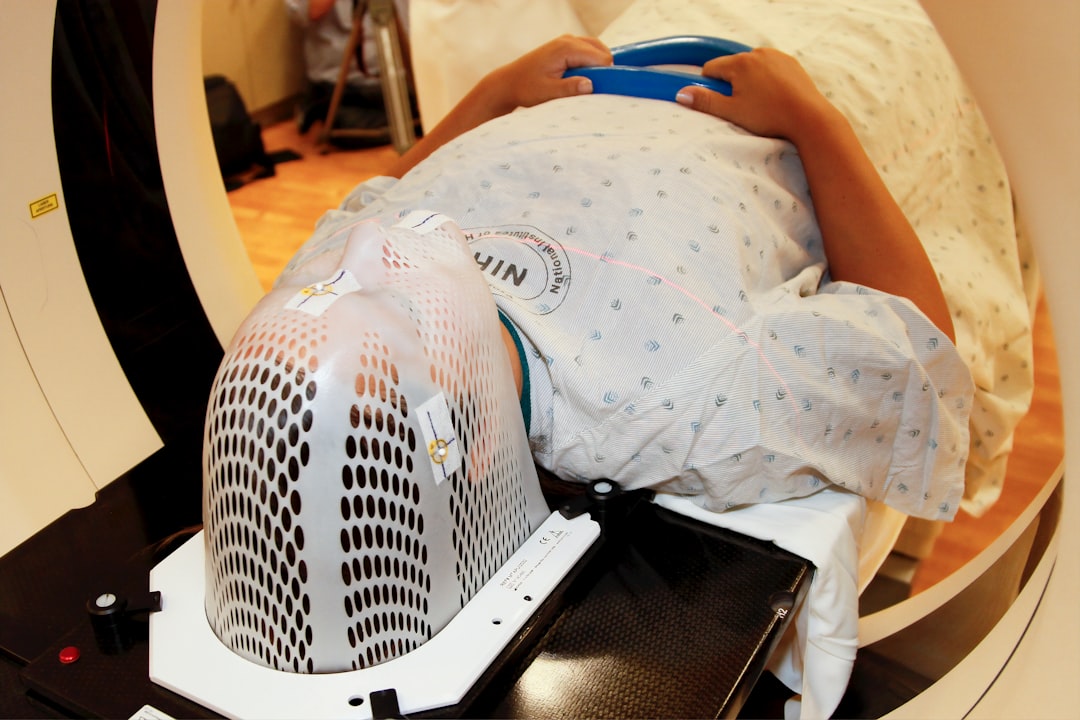
Did your spinal cord stimulator implant cause a severe headache and CSF leak — and did your medical team respond properly?
Pre-procedure imaging and patient assessment to confirm safe needle entry level
Careful epidural needle insertion using loss-of-resistance technique to avoid dural puncture
Immediate recognition of accidental dural puncture if CSF flows back through the needle
Post-procedure monitoring for positional headache, neck stiffness, or neurological symptoms
Timely treatment — conservative management or epidural blood patch — to seal the leak and prevent lasting harm
If the clinical team skipped or delayed any of these steps, the resulting harm may not have been inevitable — it may have been preventable.
Understanding dural puncture and CSF leak: what normally happens during Precision Spectra implantation
The Precision Spectra is a spinal cord stimulation (SCS) system made by Boston Scientific. Surgeons implant it to treat chronic pain conditions — most commonly back and leg pain — by delivering mild electrical impulses to the spinal cord. The procedure involves placing one or more leads (thin wires) into the epidural space, which is the narrow channel just outside the membrane that surrounds the spinal cord.
That membrane is called the dura mater. The fluid inside it — cerebrospinal fluid, or CSF — cushions the brain and spinal cord. During lead placement, the surgeon inserts a large-bore needle into the epidural space. Proper technique keeps the needle tip just outside the dura. When the needle accidentally goes too far and pierces the dura, this is called a dural puncture or accidental dural puncture (ADP).
What a CSF leak feels like
A CSF leak causes fluid to escape through the puncture hole. The brain loses its cushioning support. Most patients develop what clinicians call a post-dural puncture headache (PDPH) — a severe, throbbing headache that worsens dramatically when the patient sits or stands, and eases when they lie flat. This positional pattern is the defining feature of a CSF leak headache.
Other symptoms include neck stiffness, nausea, sensitivity to light, ringing in the ears, and in serious cases, double vision or hearing loss. For more general information about spinal procedures and their risks, Healthdirect Australia provides accessible health information for the public.
Key fact: Dural puncture during epidural procedures occurs in roughly 0.5–2% of cases, but the rate rises with larger needles — like those used in SCS lead placement.
Key fact: An epidural blood patch — where the doctor injects a small amount of the patient’s own blood near the puncture site — is the most effective treatment for a persistent CSF leak headache.
Key fact: Without treatment, a CSF leak can cause intracranial hypotension (low pressure in the skull), which may lead to subdural haematoma — bleeding between the brain and skull.
Key fact: NSW law requires clinicians to warn patients of material risks before a procedure. A dural puncture during SCS implantation is a material risk that patients have a right to know about in advance.
When things start to go wrong — warning signs after lead placement
Not every headache after a spinal procedure signals a CSF leak. But certain features make a post-dural puncture headache distinct from a tension headache or a reaction to anaesthesia. Recognising those features quickly matters enormously — because early treatment prevents serious complications.
Warning signs that should have prompted urgent clinical action:
• A severe headache that begins within 24–48 hours of the procedure
• Pain that worsens significantly when the patient sits up or stands, and improves when lying flat
• Neck stiffness or pain radiating into the shoulders
• Nausea and vomiting accompanying the headache
• Sensitivity to light or sound
• Ringing in the ears or muffled hearing
• Double vision or difficulty focusing
• Neurological changes — confusion, weakness, or altered consciousness
• A headache that does not respond to standard pain relief
Any one of these symptoms after an epidural lead placement should prompt the clinical team to consider a dural puncture. Two or more together — especially the positional pattern — should trigger immediate assessment and a plan for treatment.
A common pattern — where care can break down
Dural puncture during SCS implantation does not always cause harm on its own. The harm often comes from what the clinical team does — or fails to do — after the puncture occurs. Several distinct failure patterns appear repeatedly in cases involving post-dural puncture headache.
Failure to recognise the puncture during the procedure
When CSF flows back through the needle, a competent clinician recognises this immediately. Some clinicians mistake CSF for saline used during the procedure. Others proceed with lead placement despite the sign. Either way, the team loses the chance to make an early decision about whether to continue, abort, or modify the procedure.
Dismissing the patient’s headache as minor
Patients frequently report that nursing staff or junior doctors attributed their severe headache to dehydration, stress, or a normal post-operative response. The positional nature of the headache — the defining feature of a CSF leak — goes unrecorded or unexamined. Hours or days pass without proper assessment.
Delayed or refused blood patch treatment
An epidural blood patch is the standard treatment for a persistent post-dural puncture headache. Some clinical teams delay offering it, insisting on extended conservative management (bed rest, fluids, caffeine) even when the patient’s symptoms are severe and worsening. Others refuse to perform it at all, sending the patient home with oral pain relief. This delay allows the CSF leak to continue and the risk of serious complications to grow.
Failure to monitor after discharge
Some patients develop their worst symptoms after leaving hospital. A clinical team that discharges a patient without clear written instructions about warning signs — and without a clear pathway to return for urgent review — may leave that patient without recourse when their condition deteriorates at home.
No documentation of the puncture
In some cases, the clinical team does not record that a dural puncture occurred. The patient leaves hospital without knowing what happened. Later, when they seek treatment for ongoing symptoms, no clinician has the information needed to connect the headache to the original procedure. The Australian Commission on Safety and Quality in Health Care sets national standards for clinical documentation and incident reporting — standards that apply directly to adverse events like accidental dural puncture.
Monitors the patient closely for positional headache in the hours after the procedure
Offers conservative management first, then escalates to a blood patch within 24–48 hours if symptoms persist
Provides written discharge instructions that name the warning signs of a worsening CSF leak
Arranges follow-up review and documents the incident in the patient’s medical record
Nursing staff attribute the patient’s severe headache to dehydration or anxiety
The blood patch is delayed for days, or the patient is told it is not necessary
The patient is discharged with no information about the dural puncture or what to watch for
No incident report is filed and the puncture does not appear in the medical record
Why this matters legally
Every clinician who treats a patient owes that patient a duty of care — a legal obligation to provide treatment that meets the standard of a competent practitioner in the same field. This duty does not disappear because a complication is known or listed as a risk of the procedure.
A dural puncture during SCS lead placement may be an accepted risk. But the clinical team’s response to that puncture — how they monitor, communicate, treat, and document — is entirely within their control. When that response falls below the standard a competent pain specialist or neurosurgeon would have provided, the law may treat it as a breach of duty.
Not every complication equals negligence. A patient who develops a headache that resolves quickly with conservative management, and whose team responded promptly and appropriately, has experienced a complication — not negligence. The legal question is whether the care provided met a reasonable standard at every stage. For a detailed explanation of how NSW medical negligence law works, see Reframe Legal — Medical Negligence.
A dural puncture that the team recognised immediately, documented, monitored carefully, and treated with a timely blood patch — even if the patient still experienced a headache for several days
A dural puncture that the team failed to document, a headache that nursing staff dismissed for 48 hours, and a blood patch that the team refused — resulting in a subdural haematoma requiring emergency surgery
This is a general educational framework only. Each case is assessed on its individual facts.
When a dural puncture after Precision Spectra implantation may amount to medical negligence
NSW medical negligence law sits primarily under the Civil Liability Act 2002 (NSW). That Act sets out the standard of care a clinician must meet — broadly, the standard of a reasonable person with that clinician’s training and expertise. It also governs how courts assess causation and what compensation a court may award.
Several specific scenarios may give rise to a negligence claim in this context.
If the surgeon failed to warn you about dural puncture risk before the procedure, and you would have declined or delayed the procedure had you known, this may constitute a failure of informed consent — a separate but related legal claim.
If the clinical team proceeded with lead placement after recognising a dural puncture, without discussing the risks with you or modifying the approach, that decision may fall below the standard of care.
If nursing staff or junior doctors dismissed your positional headache without escalating it to the treating surgeon, and that delay allowed a CSF leak to worsen into a more serious complication, the failure to escalate may constitute a breach.
If the team refused or unreasonably delayed an epidural blood patch despite persistent and severe symptoms, and you suffered lasting harm as a result, that delay may be the direct cause of your injury.
If nobody told you that a dural puncture had occurred, and you left hospital without that information, the failure to disclose may have prevented you from seeking timely treatment elsewhere.
When harm becomes long-term or permanent
For most patients, a post-dural puncture headache resolves within days to weeks with proper treatment. But when the clinical team delays or mismanages care, the consequences can extend far beyond a temporary headache.
Physical consequences of untreated CSF leak
A persistent CSF leak causes intracranial hypotension — abnormally low pressure inside the skull. Over time, this can cause the brain to sag downward within the skull, stretching the structures that support it. Patients develop chronic daily headaches, neck pain, and cognitive difficulties. In serious cases, the low pressure causes blood vessels to tear, producing a subdural haematoma — a blood clot between the brain and skull that may require emergency surgery.
Some patients develop cranial nerve damage, causing permanent hearing loss, double vision, or facial numbness. Others experience ongoing spinal cord symptoms — weakness, numbness, or bladder and bowel dysfunction — if the leak affects spinal cord pressure directly.
Psychological and financial consequences
Patients who entered the procedure hoping to reduce their chronic pain often find themselves managing a new, severe, and disabling condition. Many develop anxiety and depression. Some cannot return to work. The financial impact — lost income, ongoing medical treatment, home care, and repeated hospital admissions — accumulates rapidly.
Particularly distressing is the situation of patients who were never told a dural puncture occurred. These patients spend months seeking answers for symptoms that no clinician connects to the original procedure. That diagnostic delay compounds both the physical harm and the psychological toll.
What compensation can cover in dural puncture and CSF leak cases
NSW compensation law allows a successful claimant to recover damages across several categories. These include pain and suffering, loss of income (past and future), the cost of medical treatment already received, the cost of future treatment, and the cost of care provided by family members or paid carers.
In cases involving a Precision Spectra implant and a mismanaged dural puncture, the compensation claim may also include the cost of additional procedures — such as emergency surgery for a subdural haematoma — that the patient would not have needed with proper care.
| Level of harm | Typical compensation range |
|---|---|
| Moderate injury | $50,000–$150,000 |
| Serious injury | $150,000–$500,000 |
| Severe / life-changing injury | $500,000+ |
Each case is assessed on its own facts. These figures are general ranges only. A case involving permanent neurological injury, an inability to return to work, and years of ongoing treatment will attract a significantly higher assessment than a case involving a resolved headache with a short recovery period.
Time limits apply in NSW. Generally, a person has three years from the date they knew — or ought reasonably to have known — that they had a potential claim. For patients who were never told a dural puncture occurred, this time limit may run from a later date. Seeking legal advice sooner rather than later protects your options.
Bringing it together — do the pieces fit?
You may be reading this article because something felt wrong after your Precision Spectra implant. Perhaps you developed a severe headache that nobody took seriously. Perhaps you were discharged without answers. Perhaps you later learned — from another doctor, or from your own research — that a dural puncture had occurred during your procedure.
Connecting these pieces — what happened, what should have happened, and what the gap between them caused — is the core of a medical negligence assessment. For a plain-English explanation of how that process works in NSW, see Reframe Legal — How Medical Negligence Claims Work in NSW.
You don’t need certainty to understand your position
Many people who experienced a dural puncture after SCS implantation spend months — sometimes years — doubting themselves. They wonder whether the headache was really that bad. They wonder whether they should have pushed harder for treatment. They wonder whether the clinical team was simply doing its best in a difficult situation.
Self-doubt is a normal response to a confusing and painful experience. But legal clarity does not require certainty. It requires an honest examination of the facts — what the records show, what the clinical team did and did not do, and what a competent practitioner in the same position would have done differently.
Informed consent is also a separate and important part of this picture. If nobody told you before the procedure that dural puncture was a risk, or if the explanation of that risk was inadequate, that failure may form part of a legal claim. For more on how consent law works in NSW, see Reframe Legal — Informed Consent and Medical Negligence.
Patients also have the right to make a complaint about a registered health practitioner to AHPRA — Australian Health Practitioner Regulation Agency. A complaint to AHPRA is separate from a legal claim and does not affect your right to pursue compensation.
About the lawyer behind this article

Dr Rosemary Listing is a NSW lawyer with a PhD focused on medical negligence. Her academic and legal work centres on the gap between what patients are owed and what they actually receive — particularly in procedural and interventional settings.
Dr Listing has worked on cases involving spinal cord stimulation procedures. Her focus in these cases is always the same: did the clinical team meet the standard of care at every stage — during the procedure, in the hours after it, and at discharge?
In her experience, the harm in these cases rarely comes from the puncture itself. It comes from the hours and days that follow — from dismissal, delay, and a failure to document. Patients who suffered a preventable complication deserve to understand whether that harm was avoidable.
The people who seek Dr Listing’s guidance are not looking to blame anyone. They are trying to understand what happened to them. Many entered the Precision Spectra procedure hoping for relief from years of chronic pain — and left with a new and serious condition that nobody explained.
Dr Listing’s role is to examine the clinical record, identify where the standard of care may have been breached, and give her clients a clear and honest picture of where they stand legally. That clarity — whatever it reveals — is what her clients are seeking.
This article is general legal information only. It does not constitute legal advice. Each person’s circumstances are different. The law discussed applies to New South Wales, Australia. Time limits apply to legal claims.