
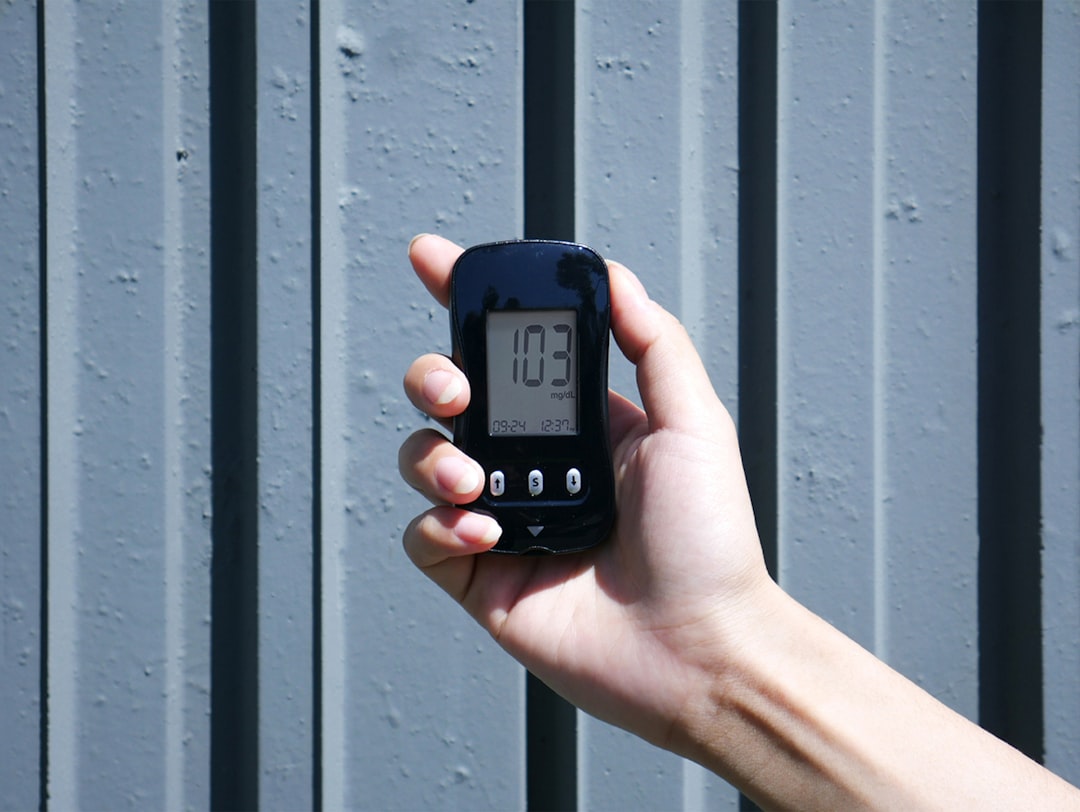
Omnipod CGM Wrong Readings and Hypoglycaemia: Was Your Doctor’s Failure to Act Medical Negligence?

You trusted the technology. You trusted the clinician. One of them let you down.
Living with insulin-dependent diabetes means making dozens of decisions every day based on numbers. When you use an Omnipod insulin delivery system paired with a continuous glucose monitor (CGM), you are placing enormous trust in two things at once: the accuracy of the device, and the competence of the clinician who prescribed it, set it up, and is supposed to be monitoring how it is working for you.
When something goes wrong — a severe hypoglycaemic episode, a hospital admission, a seizure, a fall, a period of unconsciousness — the first question most people ask is whether the device failed. That is a reasonable question. But it is often the second question that matters more legally: did the clinician responsible for your care fail to respond to warning signs that were already there?
This article is for people who have experienced a serious hypoglycaemic event, or repeated dangerous episodes, while using an Omnipod system with CGM, and who are wondering whether the care they received — or did not receive — played a role. By the end, you will understand what your treating team was required to do, what the most common failures look like, and what Australian law says about when that failure becomes something more than a bad outcome.
What You Were Entitled to Expect
The Omnipod system is not a set-and-forget device. It requires active clinical oversight. When a clinician prescribes an insulin pump and CGM combination, they take on a specific set of obligations — not just at the point of prescription, but continuously throughout your care.
What it requires: Clinicians prescribing and managing insulin pump therapy combined with CGM must provide structured patient education on device use, alarm interpretation, and hypoglycaemia management protocols. They must conduct regular review of CGM data — including time-in-range, alarm frequency, and calibration accuracy — and adjust therapy in response to identified patterns. Patients must be given a clear action plan for sensor failure, inaccurate readings, and hypoglycaemia.
Why this matters: Many patients are handed a device and a brief instruction session, then left to manage complex technology without the ongoing clinical support these guidelines require.
The Australian Commission on Safety and Quality in Health Care also sets expectations around the safe use of high-risk medicines — and insulin is classified as a high-alert medication in Australian health settings. That classification exists because the consequences of getting the dose wrong, even briefly, can be catastrophic. For more on patient safety standards in Australian healthcare, see the Australian Commission on Safety and Quality in Health Care.
For general information about diabetes management and CGM devices, Healthdirect Australia provides accessible, clinically reviewed resources.
78% of insulin pump reports
43% of CGM-related reports
61% in patient surveys
~35% of pump-related hospitalisations
A woman in her late thirties with Type 1 diabetes had been using an Omnipod system with integrated CGM for fourteen months. She had reported to her endocrinologist on three separate occasions that her CGM readings seemed to lag significantly behind her finger-prick results, particularly overnight. Each time, she was told the device was “within acceptable range” and no adjustment was made to her alarm thresholds or insulin settings. Six weeks after her third report, she was found unconscious by her partner at 3am with a blood glucose level of 1.4 mmol/L. She spent two days in hospital and has not returned to full-time work since.
The Failure Patterns That Lead to Harm
Ignoring repeated reports of inaccurate readings
A teenage boy’s parents had contacted their diabetes nurse educator four times over three months to report that his Omnipod CGM was consistently reading 2–3 mmol/L higher than his finger-prick results. The educator documented the calls but took no action beyond advising the family to “keep an eye on it.” When the boy had a seizure at school triggered by undetected hypoglycaemia, the CGM had been showing a reading of 6.2 mmol/L — well within the safe range — while his actual blood glucose was 2.1 mmol/L. The pattern had been visible in his data for months.
A CGM is only useful if it is accurate. When a patient reports a consistent discrepancy between CGM readings and finger-prick results, that is a clinical signal — not a complaint to be managed. The clinician responsible for that patient’s care was required to investigate the discrepancy, consider whether the sensor site, calibration protocol, or device settings needed adjustment, and document what action was taken. Failing to act on repeated reports of inaccuracy is not a minor oversight. It removes the patient’s ability to make safe decisions about insulin dosing and hypoglycaemia management, because the number they are relying on is wrong.
Failing to set appropriate alarm thresholds
CGM devices including those integrated with the Omnipod system allow clinicians and patients to set alarm thresholds — the glucose levels at which the device will alert the user to a rising or falling trend. These thresholds are not one-size-fits-all. A person with hypoglycaemia unawareness — meaning they do not feel the physical warning signs of low blood sugar — needs different alarm settings than someone who reliably experiences symptoms at 3.5 mmol/L. A clinician who prescribes a CGM without individualising alarm thresholds, or who fails to review and adjust those thresholds over time, has not met the standard of care. The alarm is the last line of defence. If it is set too low, or if the patient was never told how to respond when it sounds, the device cannot do what it was prescribed to do.
No structured education on what to do when the device fails
CGM sensors fail. They lose adhesion, they drift in accuracy, they require recalibration, and they have known periods of inaccuracy — including the warm-up period after insertion and during rapid glucose changes. Every patient using a CGM-integrated insulin pump system should receive explicit, documented education on what to do when the sensor is not working correctly. That means: when to revert to finger-prick testing, what glucose level to treat as the threshold for action, and how to adjust insulin delivery manually. When this education is not provided — or is provided so briefly that it cannot reasonably be retained — and a patient makes a dangerous decision based on a faulty reading, the failure is not the patient’s.
Inadequate review of downloaded CGM data
Modern CGM systems generate detailed data. Every glucose reading, every alarm, every period of sensor inaccuracy is recorded and can be downloaded and reviewed at a clinical appointment. When a clinician reviews this data and fails to identify a pattern of nocturnal hypoglycaemia, repeated low-glucose alarms that were not acted on, or persistent sensor inaccuracy, that is a failure of clinical oversight. The data was there. The obligation to look at it, understand it, and act on it was there. The question in a negligence context is whether a competent clinician in the same position would have identified the risk and done something about it.
What happened: A patient suffered serious harm after a clinician failed to act on documented warning signs that were present in the clinical record over an extended period. The treating doctor had access to the relevant information but did not respond to it in a way that a competent practitioner would have.
What the court found: The failure to act on available clinical information constituted a breach of the duty of care. The court confirmed that the standard is not perfection, but what a reasonable clinician in that position would have done with the information available to them.
Why this matters: If your CGM data showed a pattern of dangerous readings and your clinician had access to that data but did not act on it, this principle applies directly to your situation.
What Your Situation Might Mean
If you reported inaccurate CGM readings to your clinician on more than one occasion and no investigation or adjustment was made, and you subsequently experienced a severe hypoglycaemic event, there is a real question about whether the failure to act contributed to your harm. The fact that you raised the concern and it was dismissed is significant — it means the clinician had the information and chose not to use it.
If you were never given a clear plan for what to do when your CGM sensor was not working correctly, and you made an insulin dosing decision based on a reading you had no reason to distrust, the absence of that education may be a failure of care. Patients are not expected to know what clinicians are required to tell them. If you were not told, that is not your fault.
If your CGM data — which your clinic may have downloaded at appointments — showed a pattern of nocturnal hypoglycaemia or repeated low-glucose alarms in the weeks before a serious event, and your clinician did not identify or act on that pattern, the question is whether a competent clinician reviewing the same data would have done something different. In many cases, the answer is yes.
If the device itself malfunctioned in a way that was not foreseeable and not detectable by your clinical team, that is a different situation. A genuine device failure that no reasonable clinician could have anticipated or prevented is not the same as a failure of clinical oversight. The distinction matters, and it is one that requires careful examination of the records.
The Legal Picture
In Australia, the clinicians responsible for your care — your endocrinologist, diabetes educator, and any GP involved in managing your insulin therapy — owe you a duty of care. That duty requires them to prescribe and manage your device to the standard of a reasonably competent specialist in that field. It requires them to respond to information you give them. It requires them to review the data your device generates and act on what it shows. And it requires them to ensure you have the knowledge and tools to manage safely when the device does not perform as expected.
Australian negligence law, as it applies to medical care, asks three questions: did the clinician owe you a duty of care (yes, always in a treating relationship); did they fall below the standard of a reasonable clinician in their position; and did that failure cause your harm? The third question — causation — is often the most complex in CGM cases, because it requires establishing that the harm would not have occurred if the clinician had acted appropriately. That is a question for expert clinical opinion, not assumption.
A bad outcome is not automatically negligence. Severe hypoglycaemia can occur even with excellent clinical management. But when the warning signs were there, the data was available, the patient had raised concerns, and nothing was done — that is a different situation entirely.
For more on how medical negligence claims work in Australia, see Reframe Legal — Medical Negligence.
General educational framework only. Every case depends on its own facts.
The Harm That Follows
Severe hypoglycaemia is not a brief inconvenience. The physical consequences of a blood glucose level that drops to dangerous levels — particularly if it is not detected and treated quickly — can be immediate and lasting.
In the short term, a severe hypoglycaemic episode can cause loss of consciousness, seizure, cardiac arrhythmia, and, in the most serious cases, death. Falls during a hypoglycaemic episode cause fractures, head injuries, and soft tissue damage. People who are found unconscious may experience aspiration or prolonged hypoglycaemia before help arrives, which compounds the neurological impact.
Over time, repeated severe hypoglycaemic episodes are associated with measurable cognitive decline — particularly in memory, processing speed, and executive function. Research published in the Lancet Diabetes & Endocrinology has found that adults with Type 1 diabetes who experience recurrent severe hypoglycaemia show significantly greater cognitive impairment over a ten-year period than those who do not. For children and adolescents, the developing brain is particularly vulnerable.
The psychological consequences are also real and often underestimated. Fear of hypoglycaemia — a recognised clinical condition — can cause people to deliberately run their blood glucose higher than is safe, increasing the risk of long-term complications including retinopathy, nephropathy, and neuropathy. People who have experienced a severe episode, particularly one that involved loss of consciousness or required emergency intervention, frequently develop anxiety, sleep disturbance, and avoidance behaviours that affect their quality of life and their relationships.
Financially, the impact can be significant. Time off work during recovery, the cost of additional medical appointments and specialist reviews, the need for increased monitoring equipment, and in serious cases the cost of rehabilitation or ongoing care — these are real losses that compound over time.
What Compensation Covers
If a negligence claim is established, compensation in Australia is designed to address the full range of losses — not just the immediate medical costs. General damages cover pain, suffering, and loss of enjoyment of life. Special damages cover economic losses: income lost during recovery, future earning capacity if the harm has affected your ability to work, the cost of past and future medical treatment, and the cost of care provided by family members or professionals.
Most Australian states and territories require a threshold level of harm before general damages for pain and suffering can be claimed. The threshold varies by jurisdiction, but in general terms it requires that the injury has caused a significant and lasting impact on your life — not a temporary setback. Severe hypoglycaemia with lasting cognitive, psychological, or physical effects will typically meet that threshold.
Time limits apply. In most Australian states, you have three years from the date you knew, or ought reasonably to have known, that you had suffered harm as a result of a care failure. For harm that was not immediately apparent — including cognitive effects that emerged over time — the discovery rule may extend that period. Do not assume you have missed the window without getting advice.
| Severity of harm | Indicative range (Australia) | What this covers |
|---|---|---|
| Moderate injury with recovery | $50,000–$150,000 | Treatment costs, time off work, pain and disruption |
| Serious injury with lasting effects | $150,000–$500,000 | Permanent impairment, ongoing treatment, care needs |
| Severe or life-changing injury | $500,000–$2,000,000+ | Catastrophic loss of function, lifetime care, lost earning capacity |
General reference ranges only. Every case turns on its own evidence.
For a fuller explanation of how claims are assessed and run in Australia, see Reframe Legal — How Medical Negligence Claims Work in Australia.
Was It Avoidable?
If you are asking whether your doctor’s failure to act on what you told them could have caused your hypo, the honest answer is: it depends on what the records show — and that is exactly the right question to be asking.
What the records will show is more important than what anyone remembers. Clinical notes, downloaded CGM data, appointment summaries, and any written communications between you and your treating team create an objective picture of what was known, when it was known, and what was done about it. That picture is often more revealing than either party expects. The question is not whether your clinician is a good person — it is whether, on the evidence, they met the standard that was required of them.
Many people wait a long time before asking these questions. They feel guilty for questioning a clinician who may have helped them in other ways. They wonder if they are overreacting, or if they should just be grateful they survived. That is understandable. But the question of whether what happened was avoidable does not go away with time — and in most cases, the records do not either.
If consent to the device, its limitations, or the risks of inadequate monitoring was not properly explained to you, that is a separate but related issue. For more on informed consent in Australian medical negligence law, see Reframe Legal — Informed Consent and Medical Negligence.
If you want to make a complaint about a registered health practitioner, or check their registration status, see AHPRA — Australian Health Practitioner Regulation Agency.
About Dr Rosemary Listing
Dr Rosemary Listing is a medical negligence lawyer with a background in medicine. She practises exclusively in medical negligence and health law, acting for patients and families who have been seriously harmed by failures in clinical care. Her dual training allows her to engage directly with clinical records, device data, and expert evidence in a way that most lawyers cannot.
Cases involving insulin pump and CGM technology are legally and clinically complex in ways that are not immediately visible to the person who has been harmed. The failure is rarely a single dramatic event — it is usually a series of small decisions, or non-decisions, that accumulate over months. Understanding which of those decisions fell below the required standard, and which were within the range of reasonable clinical judgment, requires careful analysis of both the clinical guidelines and the specific facts of what happened.
People who come to Dr Listing with questions about CGM-related harm have often been living with the consequences for a long time before they ask whether it was avoidable. Many have been told — directly or indirectly — that what happened was just the nature of the condition. Some have accepted that explanation. Others have not been able to, because something about the sequence of events has never sat right with them.
Dr Listing examines the clinical records alongside expert opinion from specialist endocrinologists and diabetes educators to give an honest, evidence-based answer to that question. Not every case is negligence. But every person who has been seriously harmed deserves to know whether it was.
- Australian Diabetes Society. Insulin Pump Therapy and Continuous Glucose Monitoring: Clinical Guidelines. ADS, 2023 update. Available at: diabetessociety.com.au
- Therapeutic Goods Administration. Database of Adverse Event Notifications (DAEN) — Medical Devices. Insulin pump and CGM device category, 2019–2023. Available at: tga.gov.au/resources/daen
- Diabetes Australia. Patient Experience Survey: Technology in Diabetes Management. Diabetes Australia, 2022.
- Australian Commission on Safety and Quality in Health Care. High Alert Medications: Insulin. ACSQHC, 2022. Available at: safetyandquality.gov.au
- Feinkohl I, et al. “Severe hypoglycaemia and cognitive decline in older people with type 2 diabetes: the Edinburgh Type 2 Diabetes Study.” Diabetes Care 2014;37(2):507–515.
- Asvold BO, et al. “Continuous subcutaneous insulin infusion and multiple daily injection therapy are equally effective in type 1 diabetes: a real-world study.” Lancet Diabetes & Endocrinology 2022;10(1):11–20.
- Dobler v Halverson [2007] NSWCA 335 (New South Wales Court of Appeal).
- Civil Liability Act 2002 (NSW), ss 5B, 5D; equivalent provisions in other Australian jurisdictions.
- Rogers v Whitaker (1992) 175 CLR 479 (High Court of Australia) — duty to warn of material risks.
- Omnipod 5 Automated Insulin Delivery System — Instructions for Use. Insulet Corporation, 2023. Available at: omnipod.com/au
This article contains general legal information only. It does not constitute legal advice, and reading it does not create a lawyer–client relationship. The law discussed applies to Australia. Laws and time limits vary between states and territories. You should seek independent legal advice about your specific situation.